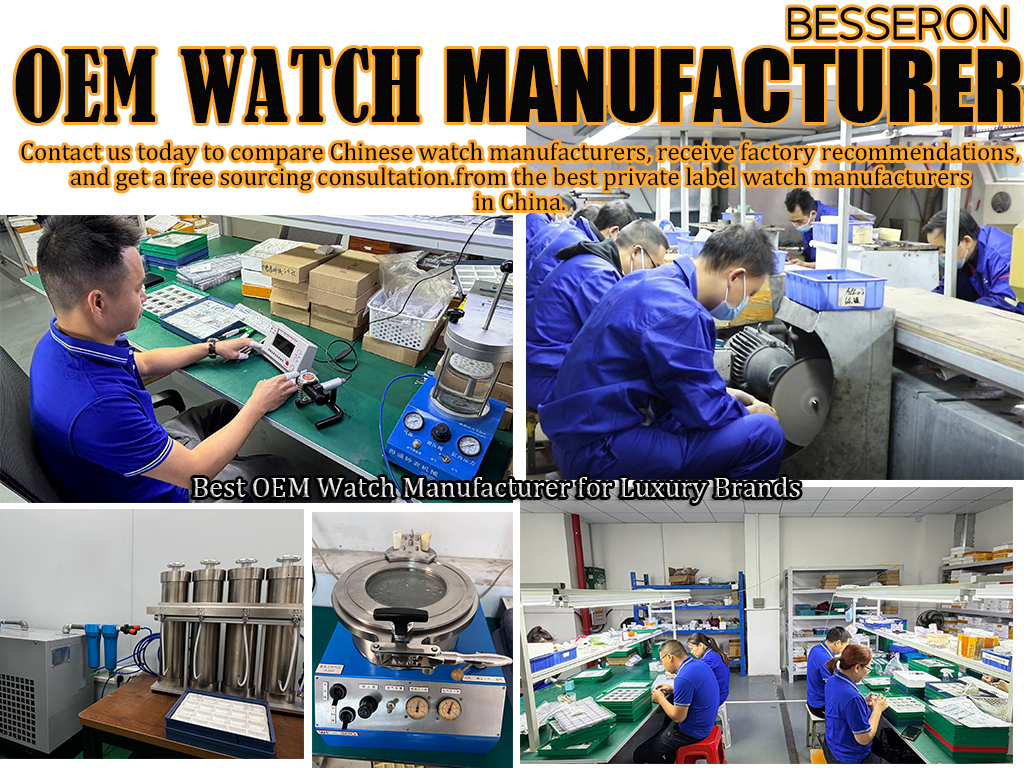
For discerning luxury watch brands and ambitious microbrands targeting the premium markets of Europe, North America, and Australia, selecting the right OEM (Original Equipment is a critical strategic decision. This partnership transcends mere assembly; it defines the quality, exclusivity, and ultimately, the success of your timepiece collection. Understanding the exacting standards and nuanced requirements of the luxury segment is paramount.
What Luxury Brands Truly Expect from an Elite OEM Watch Manufacturer
Luxury brands operate in a realm defined by heritage, craftsmanship, and unwavering quality. Their expectations for an OEM watch partner reflect this elevated positioning:
- Uncompromising Quality Control (QC): Luxury demands perfection. Every component, from multi-stage inspection processes. Tolerance levels are microscopic. Consistency across every single unit, even in large production runs, is non-negotiable.
- Mastery of Premium Materials: Expertise goes beyond sourcing; it involves deep understanding of the properties, machining, finishing, and long-term performance of high-end materials under demanding conditions.
- Access to & Expertise with Swiss Movements: The heart of a luxury watch commands respect. Partners must possess established relationships with top Swiss movement suppliers (ETA, Sellita, Soprod, Ronda) and have the technical prowess to expertly integrate, regulate, and service these precision engines. Knowledge of high-grade Japanese movements (e.g., Miyota 9015/9039) is also valued for specific segments.
- Advanced Manufacturing Capabilities: Beyond basic assembly, luxury requires capabilities like CNC machining for complex case geometries, PVD/DLC coating, intricate dial finishing (guilloché, enameling), gem-setting expertise, and sophisticated bracelet/strap construction.
- Proven Design & Engineering Support: The OEM should act as a true extension of your R&D team, offering expert guidance on design feasibility, material interactions, movement compatibility, water resistance engineering, and prototyping (3D printing, CNC samples) to translate vision into manufacturable reality.
- Intellectual Property (IP) Protection & Exclusivity: Absolute confidentiality and robust contractual safeguards for your designs, specifications, and brand identity are fundamental. The OEM should offer customization options ensuring your timepieces remain unique to your brand.
- Scalability & Reliability: The ability to handle both intricate microbrand launches (smaller batches) and or lead times is crucial. On-time delivery is expected.
- Transparency & Communication: Seamless, proactive communication throughout the development and production process builds trust. Regular updates, clear documentation, and problem-solving transparency are essential.
The Pillars of Luxury: Premium Materials Mastery
The choice of materials defines a luxury watch's feel, function, and longevity. The best OEM partners excel in working with these essentials:
- Sapphire Crystal: The Unscratchable Window: Beyond just offering it, a top manufacturer understands the nuances different grades of synthetic sapphire, anti-reflective coatings (single or multi-layer, applied internally/externally), crystal shapes (domed, flat, boxed), edge polishing, and achieving remarkable thinness while maintaining strength. This crystal is non-negotiable for high-end watches for women, men's watches, and all luxury watches.
- Stainless Steel: Beyond the Basics: Not all stainless steel is equal. Expertise lies in sourcing and expertly machining high-grade 316L surgical steel (or even more corrosion-resistant master the finishing: mirror polishing that requires multiple meticulous stages, fine brushing with consistent grain direction, intricate beveling, and combinations (e.g., brushed tops with polished sides). This craftsmanship is vital for silver watch aesthetics and durability.
- Precious Metals Expertise: True luxury OEMs possess specialized workshops for handling gold watch components (18k yellow, white, rose) and platinum. This includes specific machining techniques, polishing protocols that preserve sharp edges and details, and expertise in ensuring plating adhesion and longevity for gold-pl gold-finished pieces.
- Swiss Movement Integration: The Beating Heart: The hallmark of a luxury mechanical watch or automatic watch. The OEM must do more than just install the movement. They need the technical skill for precise regulation to chronometer standards (COSC certification often happens at the movement maker level, but assembly and casing can affect performance), proper shock protection mounting, lubrication expertise, and rigorous post-assembly timing checks. Knowledge of complex chronograph watch modules is a significant advantage. While luxury primarily focuses on mechanicals, expertise with high-accuracy quartz watch movements (like Longines VHP or Breitling SuperQuartz™ equivalents) is also important for specific lines.
- Exotic Materials & Innovation: Leading partners stay abreast of advanced materials like ceramic (scratch-resistant, lightweight), titanium (lightweight, hypoallergenic), carbon fiber composites, and proprietary alloys (e.g., Rolesor, Cerachrom). They understand their machining challenges and finishing possibilities.
For luxury brands and microbrands aiming for distinction, "off-the-shelf" simply won't suffice.
For brands targeting the luxury segment, full or deep customization is not just an option; it's a strategic necessity to build lasting value and desirability.
The journey from concept to wrist is intricate. Here's how the best OEMs manage it:
- Deep Consultation & Conceptualization: This initial phase involves intensive discussions to understand your brand DNA, target audience (e.g., specific appeal for ladies watches with diamonds or men's watches with tool watch features), price point, desired complications, and aesthetic vision. Mood boards, sketches, and competitor analysis are key.
- Technical Feasibility & Design Engineering: The OEM's engineers translate the concept into technical drawings (CAD), assessing feasibility. They advise on material choices, movement suitability (e.g., thickness for an ultra-thin design, power reserve for a skeleton watch), water resistance engineering (critical for a waterproof watch), case ergonomics, and legibility. Design for Manufacturability (DFM) principles are applied.
- Prototyping: Bringing Ideas to Life:
- 3D Printing (Rapid Prototyping): Creates resin models to assess form, size, and ergonomics quickly and relatively cheaply. Ideal for initial shape validation.
- CNC Machined Prototypes: Produced from actual case materials (e.g., stainless steel, titanium). Provides the true weight, feel, finish quality, and allows testing of assembly, crown operation, and bracelet integration. Essential for high-fidelity evaluation. Multiple iterations are common.
- Component Sourcing & Validation: The OEM leverages its network to source certified premium materials and components (movements, crystals, hands, dials, straps/bracelets). Incoming QC is performed on all parts. Gemstones for diamond watches undergo verification.
- Precision Manufacturing:
- Case & Bracelet: High-precision CNC machining from solid blocks of metal, followed by meticulous finishing (polishing, brushing, sandblasting, PVD/DLC coating). Bezel construction (especially for rotating bezels) and crown tube integration are critical.
- Dial & Hands: Complex processes like electroplating, pad printing, laser engraving, appliqué indices, lume application (Super-LumiNova®), guilloché engraving, enameling. Hands are cut, shaped, polished, filled with lume, and sometimes heat-blued.
- Movement Preparation: Swiss movements are received, inspected, often regulated, and potentially modified (e.g., custom rotor weight for an automatic watch, module addition for a chronograph watch).
- Meticulous Assembly: Skilled watchmakers assemble components in controlled environments (clean rooms). This includes movement casing, dial and hand setting (requiring immense precision under magnification), crystal press fitting (ensuring gasket seal), and final casing. Water resistance testing occurs at key stages.
- Rigorous Quality Control (QC) & Regulation: Every watch undergoes extensive QC:
- Visual inspection for flaws in multiple positions over days.
- Water resistance testing to specified pressures.
- Power reserve testing for automatic watches and mechanical watches.
- Functionality checks (date change, chronograph start/stop/reset, GMT hand).
- Bracelet/clasp operation and safety checks.
- Packaging & Logistics: Custom luxury packaging is produced and assembled. Final logistics are managed securely and efficiently to meet global distribution needs.
The rise of independent luxury watch microbrands is a defining trend. The right OEM is their enabler:
- Lower MOQ Expertise: Top luxury OEMs understand the microbrand model and offer viable MOQs (often starting around 100-300 pieces for custom projects), making luxury manufacturing accessible.
- Agility & Flexibility: They provide the responsiveness and willingness to iterate that large manufacturers often lack, crucial for navigating the challenges of a start-up.
- Design & Engineering Guidance: Offering invaluable mentorship through the complex development process, helping microbrands avoid costly mistakes.
- Access to Premium Elements: Democratizing access to Swiss movements, sapphire crystals, and high-grade finishing techniques previously reserved for giants.
- Building Credibility: Association with a reputable manufacturer known for quality lends instant credibility to a new brand.
Conclusion: The Hallmarks of the Best OEM Watch Manufacturer for Luxury
Identifying the best OEM watch manufacturer for your luxury brand or microbrand venture requires careful due diligence. Look beyond glossy brochures and assess:
- Tangible Evidence: Request and inspect sample watches they have actually produced (ideally similar to your vision). Visit the factory if possible.
- Material & Movement Certifications: Verify sourcing authenticity and quality guarantees.
- Technical Documentation: Review their QC protocols, production processes, and technical specifications.
- Client Portfolio & Testimonials: Speak to existing clients, especially those with similar project complexity.
- Cultural Fit & Communication: Ensure a collaborative spirit and transparent communication style.
The ideal partner combines Swiss-level precision, Japanese efficiency, artistic craftsmanship, and a deep commitment to realizing your unique vision for custom luxury watches. They become the silent, indispensable force behind your brand's success on the global stage.
FAQs: Choosing a Luxury OEM Watch Manufacturer
-
Q: What is the typical Minimum Order Quantity (MOQ) for a custom luxury watch project?
- A: MOQs vary significantly based on complexity. For a fully custom design using premium materials and Swiss movements, expect MOQs from 100-500 units from reputable manufacturers catering to microbrands and smaller luxury launches. Simpler modifications or high-volume luxury brands2. Q: How long does the entire process take, from concept to delivery?
- A: Developing a high-end custom watch is complex. Realistically, budget 8 to 18 months. Key phases: Design/Engineering (1-3 months), Prototyping (1-3 months, often iterative), Production Tooling/Component Sourcing (1-3 months), Manufacturing & Assembly (3-6 months), QC & Logistics (1-2 months). Simpler designs or modifications are faster.
-
Q: Can you source and certify specific materials, like conflict-free diamonds or ethically sourced gold?
- A: Reputable luxury OEM manufacturers prioritize ethical sourcing. They should have established supply chains adhering to the Kimberley Process (for diamonds) and Responsible Jewellery Council (RJC) principles (for gold and other precious metals). Request documentation verifying their sourcing policies and certifications.
-
Q: What level of customization is truly possible beyond the dial logo?
- A: With a true custom partner, almost everything is possible:, unique dial design (materials, textures, indices, sub-dials), custom hand shapes, movement choice and potential decoration/modification (e.g., skeleton watch elements), proprietary bracelet/strap designs, crown design, caseback engraving, and custom packaging. The limits are budget, manufacturability, and time.
-
Q: How do you ensure water resistance, especially for dive watches (waterproof watch is a common search term)?
- A: Achieving reliable water resistance (WR) requires meticulous engineering and. Key steps include: precision CNC machining of case components, high-quality gaskets (crown, caseback, crystal), proper gasket channel design, rigorous pressure testing at every assembly stage (not just the final watch), and adherence to ISO 6425 standards for dive watches. Ask about their specific WR testing protocols and certifications.
-
Q: What happens if we encounter quality issues after delivery?
- A: A trustworthy OEM will stand behind their work. The supply agreement should clearly define warranty terms (typically 1-2 and protocols for repair or replacement. Ensure clear communication channels for post-delivery support are established.