
In the realm of luxury timepieces, the choice of an OEM watch manufacturer is not merely a transactional decision—it’s a strategic partnership that defines brand prestige. Luxury brands and microbrands across Europe, North America, and Australia demand uncompromising excellence in craftsmanship, materials, and innovation. This article explores what distinguishes a best OEM watch manufacturer for luxury brands, delving into critical expectations, materials, movement technology, and the bespoke journey of creating high-end custom watches.
For luxury brands, quality is non-negotiable. Rigorous testing protocols—from water resistance and shock resilience to chronometric precision—must be embedded in every production phase. Brands prioritize manufacturers with ISO-certified facilities and a proven track record in delivering flawless batches.
Modern luxury consumers and B2B buyers increasingly value sustainability. OEM partners must demonstrate ethical sourcing (e.g., conflict-free minerals), eco-friendly packaging, and transparent supply chains.
Protecting design integrity is paramount. Manufacturers must implement NDAs, digital encryption, and physical security to prevent leaks, ensuring exclusivity for brands.
While sapphire crystal’s hardness (9 on the Mohs scale) is well-known, luxury brands require anti-reflective coatings on both sides for optimal legibility. Top-tier OEMs offer domed, beveled, or double-domed variants, enhancing aesthetic depth.
316L stainless steel is standard use 904L steel (common in Rolees and Patels Phillippe) for superior corrosion resistance and luster. For gold components, solid 18K gold or PVD-coated finishes that resist tarnishing are essential.
Luxury brands insist on Swiss movements (e.g., ETA 2892, Sellita SW300) for their chronometric excellence. Some OEMs now offer modular movements, allowing brands to customize complications (e.g., moon phases, GMT) without full movement redesigns.
While stock models offer faster turnaround, they limit differentiation and risk market saturation. Luxury brands partnering with stock-focused OEMs often struggle with commoditization.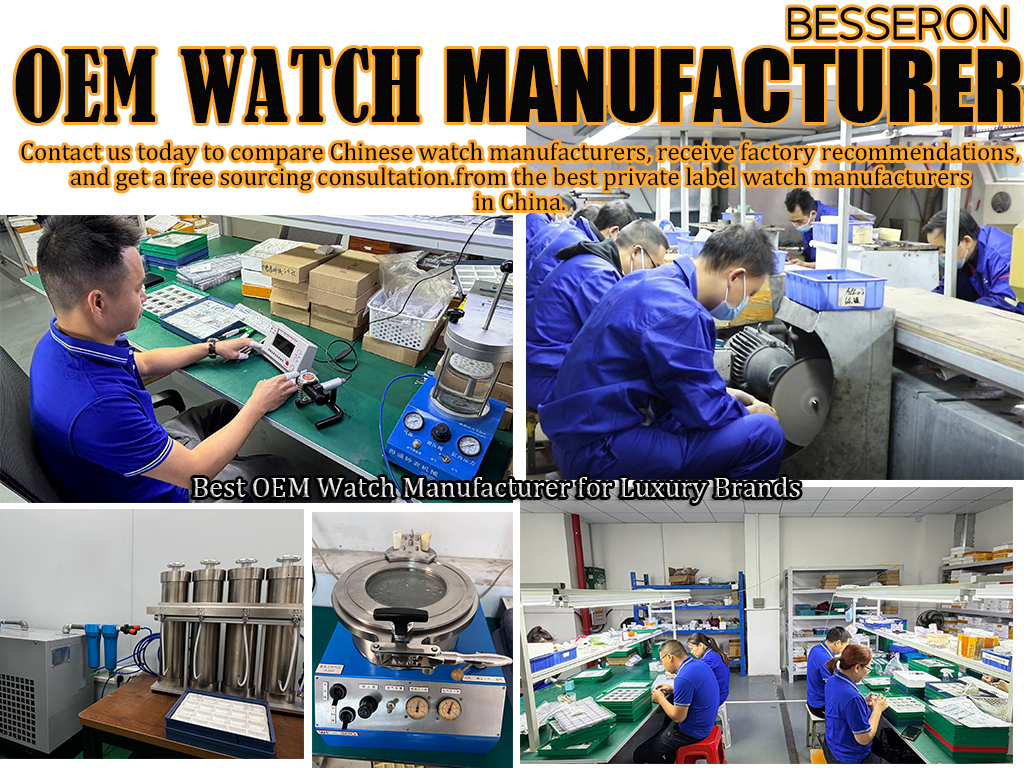
Microbrands benefit from low MOQs (e.g., 50–100 units) without sacrificing quality, while larger brands access volume discounts.
Expert OEMs handle export compliance (e.g., CITES for alligator straps), tariffs, and customs for seamless EU/Australia distribution.
Project: "Outback Chronograph"
A: From concept to delivery, expect 6–9 months for intricate designs, including prototyping, tooling, and multi-stage testing.
A: Yes, but ensure they have horological engineers experienced in high-complication assembly. Verify past tourbillon projects.
A: Reputable manufacturers use compartmentalized production (e.g., separate teams for each brand), biometric access controls, and blockchain-based digital rights management.
A: MOQs vary; specialists accommodate microbrands with 50–100 units. High-complication pieces may require 150+ units due to tooling investment.
Ready to transform your vision into a horological masterpiece? Our engineers, material scientists, and designers will guide you from concept to commercial success—all while safeguarding your brand’s exclusivity.
👉 Request Your Consultation Now

