
In the dynamic world of horology, the dream of launching a signature watch brand is no longer confined to established luxury houses. For the modern entrepreneur, the barrier to entry has been shattered by the evolution of Custom Watch Builder technologies and sophisticated B2B manufacturing ecosystems. Whether you are a microbrand founder in Berlin, a distributor in Sydney, or a designer in New York, understanding the synergy between digital customization tools and physical manufacturing services is the key to transforming a concept into a coveted timepiece.
This comprehensive guide explores the landscape of OEM (Original Equipment Manufacturing) and ODM (Original Design Manufacturing) services. We will delve into the critical role of specialized suppliers—from strap craftsmen to precision repairers—and how leveraging a custom builder can streamline your supply chain, reduce time-to-market, and ensure your brand stands out in a competitive global market.
For the B2B buyer, a Custom Watch Builder is more than just a visualization tool; it is a strategic asset for decision-making and client communication. Before a single piece of metal is cut, entrepreneurs can utilize 3D configurators to experiment with case shapes, dial textures, hand styles, and bezel designs.
Risk Mitigation: By visualizing the final product in real-time, brands can avoid costly prototyping errors. You can test the aesthetic combination of a bronze case with a ceramic bezel or a specific NATO strap color way before committing to production.
Speed to Market: Digital builders allow for rapid iteration. Instead of waiting weeks for physical samples, you can generate hundreds of design variations in hours, selecting the optimal configuration for your target demographic.
Client Engagement: For high-end retailers and distributors, offering a "customization preview" builds trust and authority, showcasing your technical capability and design flexibility.
Navigating the manufacturing landscape requires a clear understanding of the two dominant models: OEM Watch and ODM Watch. Choosing the right partner determines your control over intellectual property, cost structure, and production scalability.
|
Feature |
OEM (Original Equipment Manufacturing) |
ODM (Original Design Manufacturing) |
|---|---|---|
|
Definition |
You provide the designs; the factory produces them. |
Factory provides existing designs; you brand them. |
|
Customization |
High (Total control over specs). |
Medium (Modifications to existing molds). |
|
Investment |
Higher (Mold fees, R&D costs). |
Lower (Shared tooling costs). |
|
Best For |
Established brands with unique IP. |
Startups, Microbrands, Fast-market entry. |
|
Lead Time |
Longer (Development phase included). |
Shorter (Production ready). |
Expert Insight: Many successful microbrands start with ODM to test market waters with lower Minimum Order Quantities (MOQs), then transition to OEM once brand identity is established and capital allows for proprietary molds.
A watch is only as comfortable as its strap. The global market sees a rising demand for diverse materials, from vintage leather to high-tech forged carbon. Collaborating with specialized Watch Strap Manufacturers is crucial for brand differentiation.
Material Excellence: Top-tier suppliers offer materials ranging from 316L and 904L stainless steel to exotic options like sailcloth and Damascus steel. For instance, companies like Billow Time have set industry standards in precision metal bracelets, offering durability that matches the luxury aesthetic.
The Custom Touch: Whether you require quick-release spring bars for easy interchangeability or bespoke stitching patterns, your strap partner should provide OEM services that align with your brand’s ergonomic and visual standards.
A timepiece is an assembly of precision components. Watch Accessory Manufacturers and Parts Suppliers form the backbone of the industry, ensuring that every screw, gasket, and crystal meets rigorous standards.
Movement Selection: The heart of the watch. Sourcing reliable movements from Swiss (ETA, Ronda) or Japanese (Miyota, Seiko) manufacturers is non-negotiable for quality assurance. Authorized suppliers provide the technical datasheets and reliability your B2B clients expect.
The Details: Do not overlook the importance of high-quality crowns, pushers, and clasps. A failure in a sub-component can tarnish the reputation of an otherwise perfect watch. Working with suppliers who maintain a vast inventory of parts ensures your production line never stalls due to a missing screw.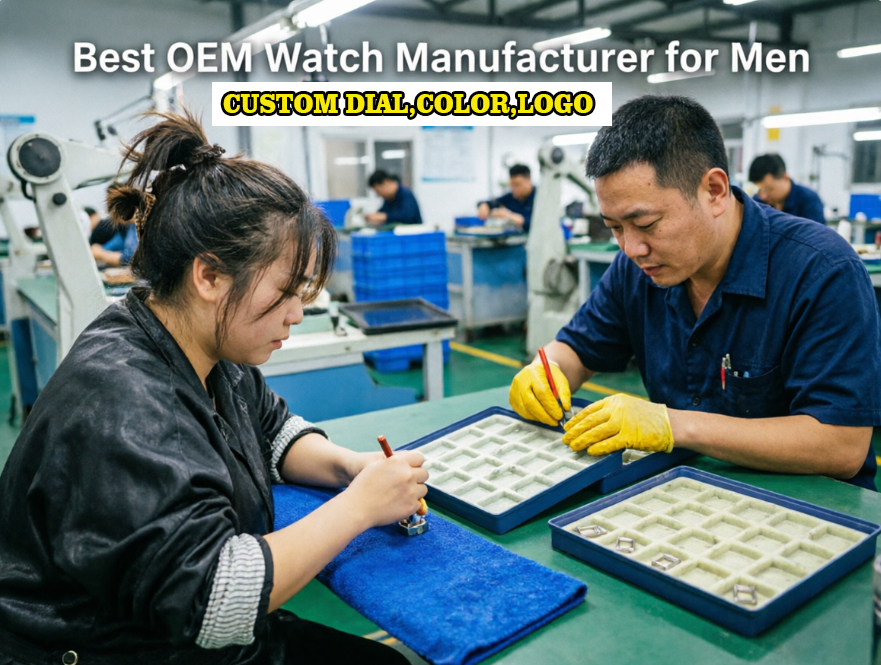
For distributors and retailers, after-sales service is a significant value proposition. Partnering with Watch Repair Service Providers and Central Maintenance Services ensures longevity and customer satisfaction.
Bulk Repair Solutions: Professional B2B repair centers offer standardized, scalable services. They handle everything from water resistance testing to movement regulation for bulk inventories, allowing retailers to maintain high service levels without in-house workshops.
Quality Control (QC): A centralized maintenance hub acts as a final QC checkpoint. Before watches reach the consumer, these services ensure that timekeeping accuracy and aesthetic perfection are guaranteed, reducing return rates for e-commerce sellers.
The final mile of the entrepreneur's journey is the point of sale. Watch Retail Chains and Specialty Boutiques are evolving from mere transaction points to cultural hubs.
Omni-channel Presence: Modern retail chains, such as Harmony World Watch Center, integrate digital experiences with physical showrooms. They offer "famous watch culture salons" and expert consultation, creating an environment where high-end technical services meet luxury retail.
Service as a Product: For the entrepreneur, aligning with retailers who offer in-house expertise (like on-site regulation or strap adjustments) enhances the perceived value of your brand.
Consider the journey of a microbrand that utilized a Custom Watch Builder to refine its debut model. By using a 3D configurator, the founder identified that a matte ceramic bezel paired with a specific vintage lume (Super-LumiNova) resonated most with their audience during the pre-launch phase. They then approached an ODM factory with these specific specs. By sourcing custom leather straps from a specialized manufacturer and pre-arranging a service contract with a repair hub for their first 500 units, they launched with a professional ecosystem in place, resulting in a 40% reduction in post-launch service inquiries.
The B2B watch market is shifting towards sustainability. Entrepreneurs are increasingly sourcing recycled steel and ocean plastic straps. Furthermore, the line between traditional horology and smart tech is blurring. OEM/ODM services now frequently include hybrid movements, requiring new partnerships with tech-component suppliers to integrate bluetooth modules and health sensors without compromising classic aesthetics.
To help you better understand the manufacturing workflow, we have included high-resolution diagrams below.
Image 1: The OEM/ODM Decision Matrix
Description: A high-quality flowchart illustrating the decision path between OEM and ODM based on budget, IP ownership, and time-to-market.
Image 2: Anatomy of a Custom Build
Description: A detailed cross-section of a luxury watch highlighting key components (Case, Movement, Dial, Strap) sourced from different specialized suppliers.
Image 3: The B2B Service Ecosystem
Description: An infographic showing the relationship between the Entrepreneur, the Custom Builder Tool, the Manufacturer, the Parts Supplier, and the End Retailer.
Q1: What is the typical Minimum Order Quantity (MOQ) for a custom watch project?
A: MOQs vary significantly. For standard ODM models, you might find MOQs as low as 300-500 pieces per variant. For full OEM projects requiring new molds (cases, dials), MOQs usually start at 50-100 pieces to amortize the tooling costs. Some manufacturers offer "low-MOQ" programs for startups, but per-unit costs will be higher.
Q2: How long does the production cycle take from concept to delivery?
A: For an ODM model with existing molds, the process can take 45-65 days. For a full OEM project involving R&D, prototyping, and mold creation, the timeline is typically 1-2 months. Utilizing a Custom Watch Builder for pre-visualization can shave weeks off the design approval phase.
Q3: Can I mix components from different suppliers (e.g., a case from Factory A and a movement from Supplier B)?
A: Yes, this is common practice. However, it requires precise technical drawings to ensure compatibility (e.g., dial foot position, crown stem length). We recommend working with a primary manufacturing partner who can manage the assembly and QC of components sourced from various specialized suppliers.
Q4: What are the most important certifications to look for in a B2B watch partner?
A: Look for ISO 9001 (Quality Management), CE (European Conformity), and RoHS (Restriction of Hazardous Substances). These certifications ensure that the manufacturing processes meet international standards for quality and environmental safety, which is crucial for selling in markets like the EU and Australia.
Q5: How do I protect my intellectual property (IP) when working with overseas manufacturers?
A: Always sign a Non-Disclosure Agreement (NDA) before sharing designs. For unique designs, consider registering your IP in the manufacturing country as well as your home market. Working with reputable, established manufacturers who value long-term relationships reduces the risk of IP infringement.
Building a watch brand in today's market is an exercise in strategic partnership. By leveraging Custom Watch Builders for design validation and assembling a supply chain of expert OEM/ODM manufacturers, strap specialists, and repair service providers, entrepreneurs can compete with the giants. The key is to view these services not as isolated vendors, but as an integrated ecosystem designed to bring precision and beauty to your customer's wrist.
Ready to start your journey? Contact our expert sourcing team today to discuss your custom project requirements and receive a tailored quotation for your brand.

