The Ultimate Custom Watch Dial Manufacturing Guide for Watch Brands
Introduction
In the competitive landscape of horology, the watch dial serves as the visual centerpiece of any timepiece. For watch brands—especially emerging microbrands in Europe, North America, and Australia—mastering custom dial manufacturing is crucial for differentiation. This guide explores every facet of custom watch dial production, from material selection to logo integration, equipping you with actionable insights to elevate your brand's design language and manufacturing efficiency.
Custom watch dials are far more than aesthetic components; they embody your brand's identity and storytelling. For microbrands, a uniquely crafted dial:
- Creates instant recognition in saturated markets
- Elevates perceived value, allowing premium pricing
- Transforms technical specifications into visual narratives
- Builds collector appeal through limited editions
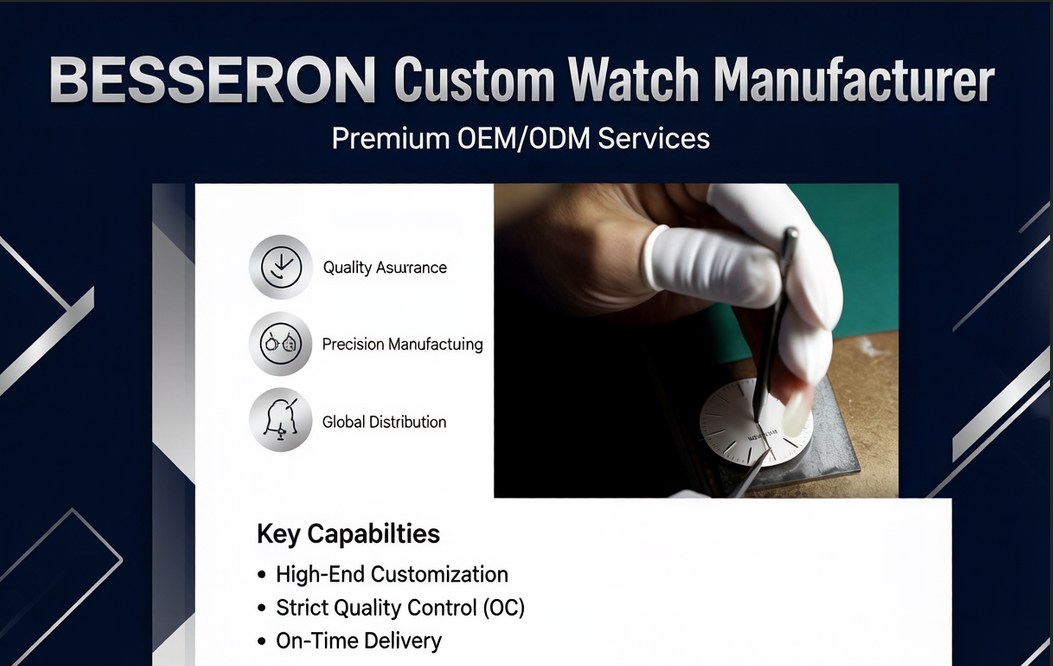
Industry analysis reveals that microbrands investing in custom dials experience ** The dial becomes your signature—a tactile representation of your horological philosophy.
Understanding dial architecture is fundamental before embarking on customization:
- Base Plate: The foundational metal disc
- Dial Feet: Alignment pins for movement mounting
- Dial Track: Minute/seconds demarcations
- Chapter Ring: Hour marker placement guide
- Logo/Aperture Zones: Strategic branding areas
- Surface Plane: Primary design canvas
Each element demands precise engineering to maintain chronometric integrity while accommodating creative expression. Superior manufacturers balance these technical constraints with artistic possibilities.
Material Selection: Where Science Meets Aesthetics
- Brass (CuZn39Pb3): The industry standard (85% usage) offering excellent machinability and plating adhesion. Requires nickel-free plating for EU compliance.
- German Silver (Nickel Silver): Premium choice for luxury pieces with distinctive warm hue. Contains 12-20% nickel—verify allergen regulations.
- Titanium Grade 5: For aviation/sports watches. 40% lighter than steel with superior corrosion resistance. Demands specialized CNC tooling.
Emerging Sustainable Options
- Recycled Ocean-Brushed Steel: Sourced from reclaimed marine structures, creating distinctive texturing
- Bio-Resin Compounds: Plant-based polymers achieving 92% opacity with wood-like grain effects
- Anodized Recycled Aluminum: 75% lower carbon footprint than virgin aluminum with vibrant color options
Material thickness typically ranges from 0.4mm (ultra-slim dress watches) to 1.2mm (tool watches). Each 0.1mm reduction requires recalibration of luminosity application.
The Art and Science of Dial Finishing Techniques
Laser Precision Applications
- Micro-Chemical Etching: 0.02mm depth precision for intricate patterns
- UV Laser Texturing: Creates tactile surfaces without material removal
- Femtosecond Laser Ablation: For nano-scale patterning impossible with mechanical methods
Traditional Mastery
- Genuine Enamel Application
- Grand Feu: 800°C fusing creating depth impossible with paint
- Flinqué: Metallic underbase with transparent enamel overlay
- Champlevé: Cell-based enamel filling requiring 0.35mm recess depth
- Hand-Guilloché: Rose engine turning achieving 220 lines per inch precision
- Diamond-Cut Anglage: 45° beveling with <0.1mm tolerance
Modern Industrial Processes
- **Physical Vapor Dep (ZrN) to rose gold (TiN+Cu)
- Thickness: 1-3μm maintaining dimensional integrity
- CVD Diamond-Like Carbon: 2000HV hardness for scratch resistance
- Electrophoretic Painting: 5μm layer uniformity surpassing spray application
Integrating Your Brand Identity: The Logo Watch Imperative
Logo application represents your most visible branding element. Technical considerations include:
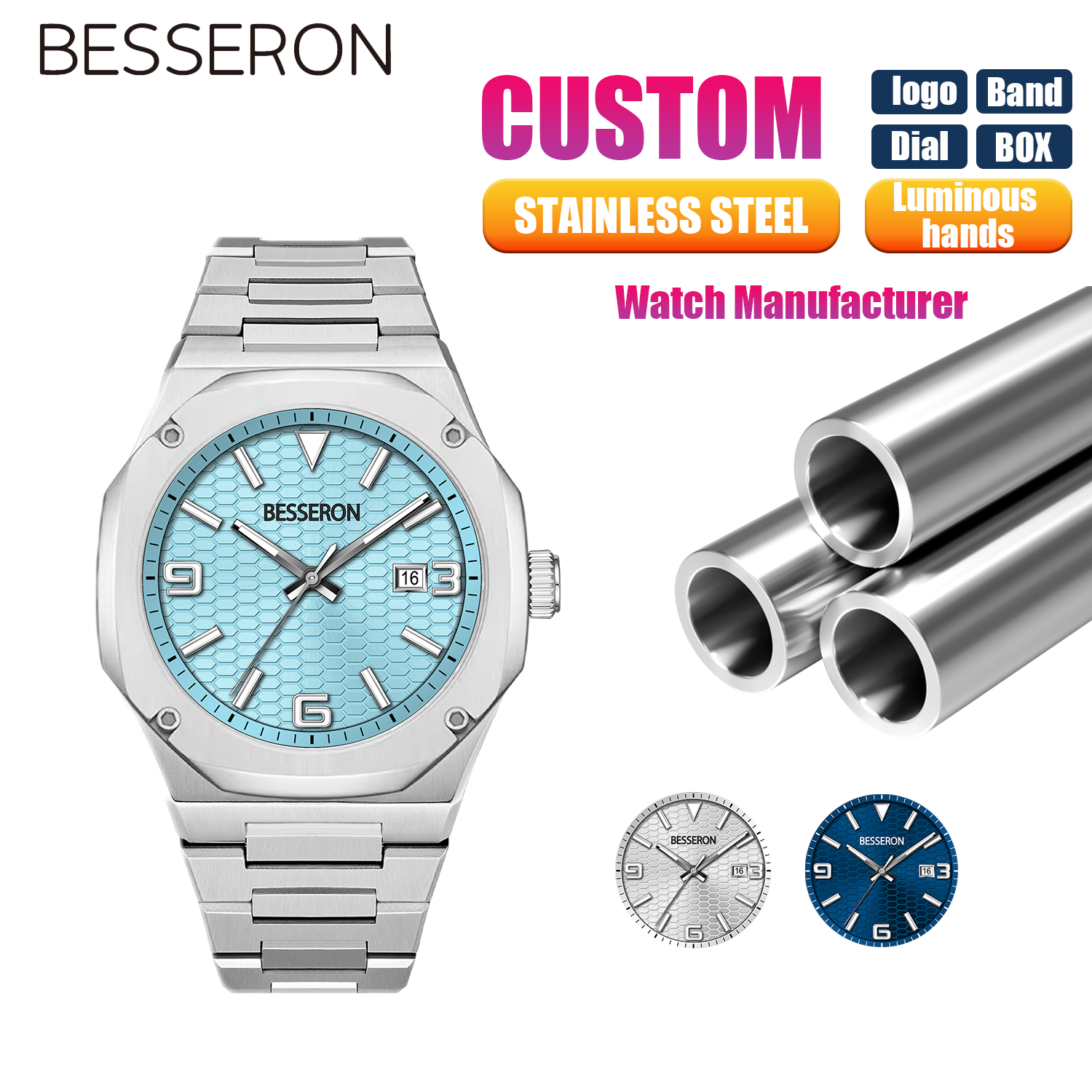
Application Methods Comparison
Technical Specifications
- Vector File Requirements: .AI or .EPS format with 0.2mm stroke minimum ΔE<2 tolerance requirement
- Positional Tolerance: Standard ±0.15mm from dial center
- Legibility Testing: Mandatory under 100 lux illumination
Microbrands should invest in 3D prototyping before mass production—$500 prototyping typically identifies 80% of application issues.
Partnering with the Right Watch Dial Manufacturer
Selection Criteria Matrix
| Factor |
Entry-Level |
Mid-Tier |
Premium |
| MOQ Capability |
100+ |
250+ |
500+ |
| Material Inventory |
3 options |
8+ |
15+ |
| Finishing Tech |
4 processes |
9+ |
18+ |
| Lead Time |
45 days |
60 days |
90days |
| IP Protection |
Basic NDA |
Secure |
Robust |
Due Diligence Checklist
- Certification Verification: ISO 9001, ISO 14001, SEDEX
- Sample Evaluation: Request physical samples, not just photos
- Supply Chain Transparency: Demand material traceability
- Technical Support: Confirm engineering assistance availability
- Revision Policy: Understand change order costs/time
Top manufacturers offer concurrent engineering—collaborating during design phase to prevent costly revisions. Expect 15-25% higher initial quotes for this service, which typically pays for itself in reduced NPI delays.
The Technical Design Workflow: From Concept to Production
Phase 1: Creative Specification
- Establish design language guidelines (heritage, modern, avant-garde)
- Define legibility requirements (luminance intensity/duration)
- Specify environmental resilience (water, UV, shock resistance)
- Determine tactile objectives (texture feedback, light play)
Phase 2: Technical Translation
- Dimensional Mapping: CAD modeling with 0.01mm precision
- Tolerance Stack Analysis: Accounting for cumulative variances
- Process Sequencing: Determining operation order to prevent finish damage
- Tooling Design: Custom jigs/fixtures for complex geometries
Phase 3: Pre-Production Validation
- 3D Printing: FDM/SLA prototypes for form verification
- CNC Machining: Limited run for finish evaluation
- Environmental Testing: 72-hour accelerated aging
- Legibility Trials: Multiple lighting conditions
This comprehensive workflow typically requires 8-12 weeks but prevents 92% of production issues according to Horological Technical Institute data.
Microbrands
Value Optimization Approaches
- Modular Design: Create base dial allowing insert customization
- Process Consolidation: Combine finishing steps (e.g., brushing before plating)
- Batch Optimization: Group similar colors/textures in production runs
- Material Rationalization: Standardize substrate thickness across collections
Budget Allocation Framework
| Component |
Premium % |
Mid-Tier % |
Value % |
| Base Material |
15-20% |
20-25% |
25-30% |
| Finishing |
35% |
25-30% |
- |
| Logo |
15-25% |
10-20% |
5-15% |
| Lume |
10-15% |
15-20% |
20-25% |
| QC |
5-8% |
5-8% |
3-5% |
Implementing these strategies, microbrands can achieve custom dials at 65-75% of typical cost without quality compromise.
Navigating Compliance: International Regulations Simplified
- EU REACH: Restrict 0.1%+ nickel migration
- California Prop 65: Cadmium (<0.001%), lead (<0.009%)
- Japan JIS: Formaldehyde emission limits
- Australia ACCC: Luminous radioactivity thresholds
Labeling Requirements
- "Swiss Made": Requires 60%+ value added in Switzerland
- Water Resistance: Must specify testing method (ISO 22810 or 6425)
- Origin Marking: Country of manufacture must be permanently affixed
Partner with manufacturers holding ICTI Ethical Manufacturing Certification toials: Emerging Technologies
Advanced Materials
- Metamaterial Surfaces: Light-manipulating nanostructures
- Self-Healing Polymers: Microcapsule-based scratch remediation
- Programmable Pigments: Electrochromic color-shifting compounds
Digital Integration
- NFC-Embedded Dials: For authentication and interaction
- Micro-Display Backplanes: Thin-film transistor integration
- Energy-Harvesting Textures: Piezoelectric pattern systems
Forward-thinking microbrands are already experimenting with hybrid analog-digital dials that maintain traditional aesthetics while offering smart functionality through companion apps.
Answers for Watch Brand Decision Makers
Q: What's the realistic minimum order quantity for custom dials?
A: While some manufacturers accept 50-piece MOQs, 100-250 units is the practical threshold for cost-effective customization. Below this, per-unit costs increase exponentially due to setup amortization.
Q: How do we ensure color consistency across production batches?
A: Implement a 3-stage control: 1) Spectrophotometric measurement (ΔE<2), 2) Controlled lighting comparison (D65 standard), 3) Batch-sequenced production to minimize formula variance.
Q: What file formats should we provide for dial artwork?
A: Vector-based .AI or .EPS files at 1:1 scale with 300 DPI resolution. Include separate layers for each color element and specify overprint requirements for registration-critical elements.
Q: How long does the dial manufacturing process typically take?
A: From approved artwork: 4-6 weeks for tooling/samples, then 8-10 weeks for full production. Expedited 12-week total timelines are possible but incur 25-40% premium.
Q: Can we use multiple finishing techniques on a single dial?
A: Yes, through masking processes. However, each additional technique increases cost by 15-30% and requires precise sequencing to prevent cross-process contamination.
Q: What luminosity duration should we specify?
A: Grade A Super-LumiNova provides 8+ hours of visibility after full charge. Specify intensity measurements at 30min (≥150 μcd/m²) and 8hr (≥25 μcd/m²) for professional-grade performance.


