Custom Watch Manufacturers vs. Watch Suppliers: Uncovering the Critical Differences for B2B Buyers
Introduction
For emerging watch brands, microbrands, and established companies sourcing from Europe, the USA, or Australia, navigating the landscape of custom watch manufacturing partners is crucial. A fundamental misunderstanding often arises: confusing watch manufacturers with watch suppliers. This confusion can lead to compromised quality, communication breakdowns, and financial losses. This comprehensive guide delves deep into the distinctions, explains why choosing the right partner matters, and provides actionable insights for B2B buyers.
Part 1: Core Definitions - Manufacturer vs. Supplier
What is a Custom Watch Manufacturer?
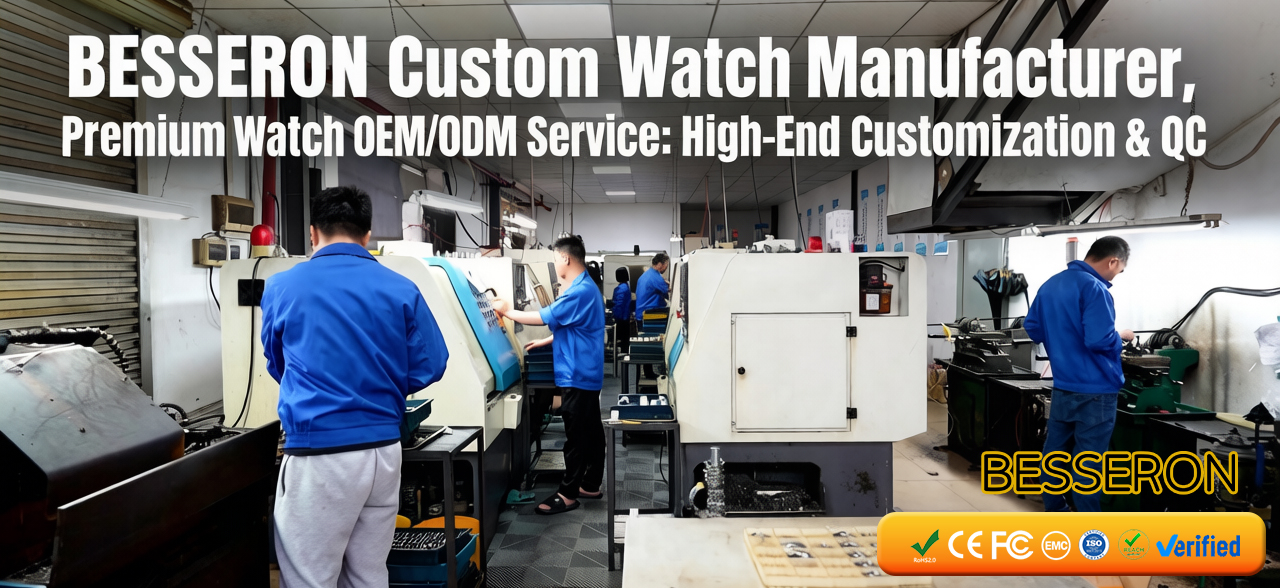
- Definition: A company that possesses the physical infrastructure, technical expertise, and skilled labor to design, engineer, and produce watches from raw materials or components. They handle the entire production process in-house.
- Capabilities: CNC machining, movement assembly (quartz/mechanical), dial making, case production, bracelet/strap manufacturing, quality control (QC), and often prototyping and design support.
- Model: Primarily operate as OEMs (Original Equipment Manufacturers). They build products to your exact specifications under your brand name.
- Capabilities: Sourcing, logistics, communication facilitation (sometimes), quality inspection (often limited or outsourced). They typically DO NOT own manufacturing facilities.
- Model: Focus on matching buyer requests with existing factory capabilities or off-the-shelf products. They add a margin for their service.
Part 2: OEM vs. Trading Company - The Operational Divide
| Feature |
OEM (Custom Watch Manufacturer |
Trading Company (Supplier) |
| Core Business |
Physical Production |
Sourcing & Reselling |
| Ownership of Plant |
Yes - Factories, machinery, production lines |
No - Office-based, relies on partner factories |
| In-House Expertise |
Engineering, R&D, QC, full assembly |
Market knowledge, supplier networks |
| Customization Depth |
High - Can create unique designs from scratch |
Low to Medium - Often modifies existing models or sources standard items |
| Pricing Structure |
Cost-based (materials, labor, overhead) + Profit |
Factory Cost + Their Markup |
| Communication |
Direct with factory engineers & QC |
Filtered through the trading company |
| IP Protection |
Generally stronger (direct NDAs, control) |
Higher risk (multiple parties involved) |
| Scalability |
Built into their production capacity |
Dependent on their factory partners |
| Best For |
Unique designs, high quality, full control, brand development |
Simpler projects, standard items, lower initial volume, convenience |
Part 3: How to Identify a Genuine Watch Manufacturer (Factory)
Avoiding "factory imposters" is critical. Here are key indicators:
-
Request Proof of Facility:
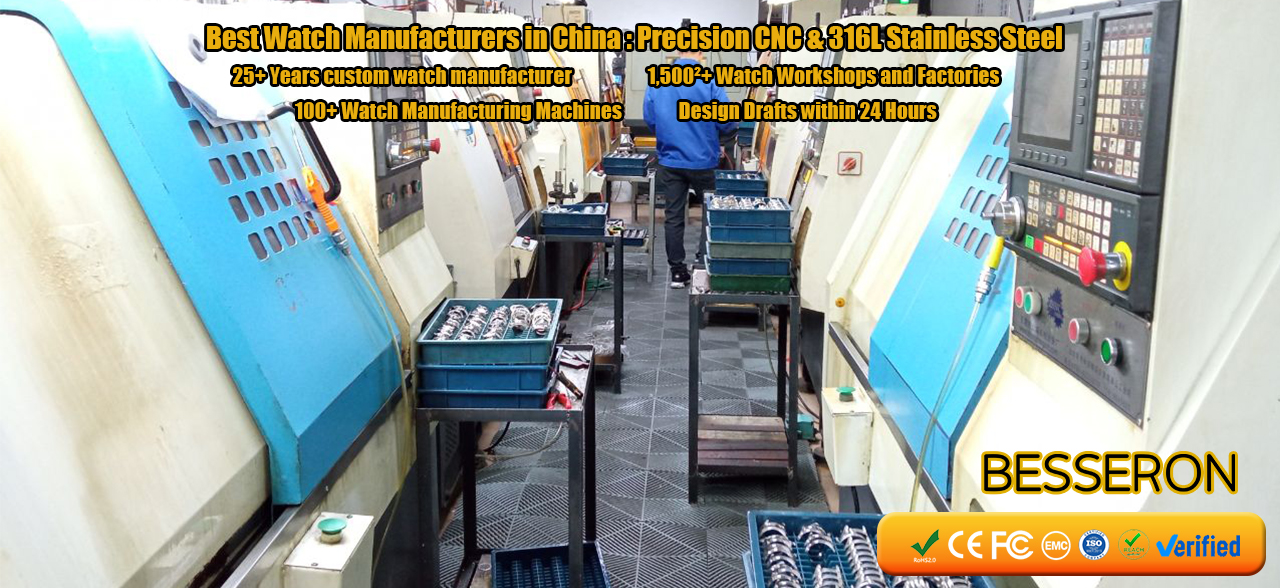
- Factory Tour (Virtual/Physical): Insist on a live video tour of the production floor. See the machinery (CNC, polishing, assembly lines), QC labs, and warehouse. Pre-recorded generic videos are insufficient.
- Detailed Photos & Videos: Ask for specific, timestamped photos/videos of their machines producing watch components (cases, dials), not just finished watches.
-
Ask Direct Technical Questions:
- Probe about specific processes: "What type of CNC machines do you use for 316L stainless steel cases?" "How do you ensure water resistance testing meets 10ATM?" "What is your process for applying lume to hands?" Genuine manufacturers can answer in detail.
-
Verify Business Scope & History:
- Business License: Request a copy and verify its scope includes "manufacturing" or "production."
- Company History: How long have they been operating? Established factories have a track record. Be wary of very new "manufacturers."
-
Check MOQ Flexibility & Lead Times:
- Factories typically have higher MOQs but offer more customization. Suppliers often have lower MOQs but less flexibility. Ask why their MOQ is set a certain way. Can they explain production batch sizing?
-
Look for Design
- Can they provide CAD services? Do they have in-house designers to help refine your concept? Trading companies usually lack this capability.
-
Transparency in Communication:
- Who are you talking to? Sales rep? Engineer? Owner? Direct access to technical staff is a good sign.
-
Beware of "Factory Adjacent" Claims: Some trading companies have offices near factories but don't own them. This is not the same as being the factory.
China remains a powerhouse for watch manufacturing for compelling reasons:
- vast industrial clusters specializing in every watch component (Shenzhen, Guangzhou). This offers unparalleled access to materials and sub-suppliers.
- Sophisticated Technical Capability: Leading Chinese OEMs possess advanced machinery (Swiss/German/Japanese CNC, laser engraving), skilled technicians, and deep expertise in both quartz and mechanical movements (including Seiko/ETA clones and custom modules).
- Cost Efficiency (Value, Not Just Cheap): While labor costs are competitive, the real advantage lies in the highly efficient supply chains and economies of scale, enabling high quality at accessible price points for B2B buyers.
- Flexibility & Customization: Chinese factories are often more adaptable to unique requests and smaller custom batches compared to some European counterparts, making them ideal for microbrands and innovative designs.
- Rapid Prototyping & Iteration: Proximity to components and responsive factories allow for quicker turnaround on prototypes and design modifications.
- Growing Quality Focus: The perception of "cheap = low quality" is outdated. Top-tier Chinese OEMs rival global competitors in quality, driven by investments in QC (ISO standards are common) and a focus on exporting to demanding markets.
- Full-Service Solutions: Many manufacturers offer end-to-end services – design consultation, prototyping, production, QC, packaging, and logistics – simplifying the supply chain for brands.
Part 5: B2B Procurement Guide - Avoiding Pitfalls When Sourcing Watches
Navigating sourcing requires diligence. Here’s a guide to avoid common pitfalls:
- Define Your Needs Precisely: Before contacting anyone, have detailed specs: design (CAD ideal), materials (case, crystal, strap), movement type/source, dial features, water resistance, packaging, target price, MOQ, timeline. Ambiguity invites problems.
- Prioritize Watch Manufacturer Identification: Use the methods outlined in Part 3. Invest time in verification. A small upfront time cost prevents massive downstream losses.
- Start with Prototypes: Never skip this step. Prototypes reveal factory capabilities, communication effectiveness, and quality potential. Budget for multiple iterations if needed.
- Due Diligence on Quality Control:
- Inspect QC Procedures: Ask for detailed QC checklists. How many stages? What tests (timegrapher, pressure, function)? What AQL level do they use?
- Third-Party QC: For significant orders, consider hiring an independent QC inspector in China for pre-shipment checks (DPI or FRI). Factor this cost in.
- Understand True Costs: Get detailed breakdowns. Be wary of quotes significantlyify payment terms (T/T stages common).
- Communication is Paramount:
- Designated Point of Contact: Ensure clear, consistent communication channels.
- Language: Confirm proficiency in your language (English) at the operational level.
- Cultural Nuances: Be clear, direct, and document everything (emails, shared docs).
- Contract Clarity: Have a formal Manufacturing Agreement covering: specs, pricing, payment terms, IP ownership, confidentiality, QC standards, delivery schedule, liability, and dispute resolution. Do not rely on verbal agreements.
- Manage Logistics & Import: Understand IncFOB commonly used). Factor in shipping costs, insurance, and import duties/taxes in your target market. Partner with a reliable freight forwarder.
- Build Relationships: Treat your manufacturer as a strategic partner. Long-term relationships foster better service, priority, and collaboration.
Conclusion: Making the Strategic Choice
The decision between a custom watch manufacturer (OEM) and a watch supplier (trading company) is fundamental to your brand's success, quality, and profitability. While suppliers offer convenience and potentially lower MOQs, they add layers of complexity, risk, and cost. For brands seeking true customization, quality control, IP security, and long-term scalability – particularly microbrands and established players investing in unique product – partnering directly with a verified, capable Chinese watch manufacturer offers a compelling strategic advantage. Diligence in selection and proactive relationship management are the keys to unlocking this potential.
Ready to Partner with a True OEM? [Your Brand - e.g., ChronoSource Manufacturing] specializes in high-quality custom watch manufacturing for discerning global brands. Contact us today for a transparent consultation and factory tour.


