In the contemporary B2B marketing landscape, corporate visibility is moving away from generic promotional items. Modern enterprises, elite private organizations, and digital-native communities are actively seeking sophisticated tangible identity touchpoints. In a world oversaturated with temporary digital advertisements and cheap throwaway corporate favors, a mechanical or highly polished quartz timepiece has emerged as a premium solution for building community loyalty and long-term brand equity.
For B2B procurement professionals, watch chain retailers, boutique horology storefronts, and independent watch brand owners across North America, Europe, and Australia, developing high-caliber custom brand watches represents a major opportunity to monetize community belonging, drive corporate influence, and foster brand alignment.
A precision-engineered timepiece is an exceptional marketing platform because it has a high psychological value and is worn daily. When a luxury car club, a premium golf community, or an enterprise technology provider commissions an OEM/ODM watch manufacturing run, they are not merely purchasing a mechanical tool to track time. They are manufacturing an elegant statement piece designed to live permanently on the client or member's wrist.
This comprehensive guide details the paradigm shift toward decentralized watch branding, maps out the top three commercial use cases for corporate gift watches, breaks down the technical engineering components that distinguish luxury execution from fashion-tier items, and establishes how flexible, small-batch agile supply chains allow emerging businesses to thrive without inventory pressure.
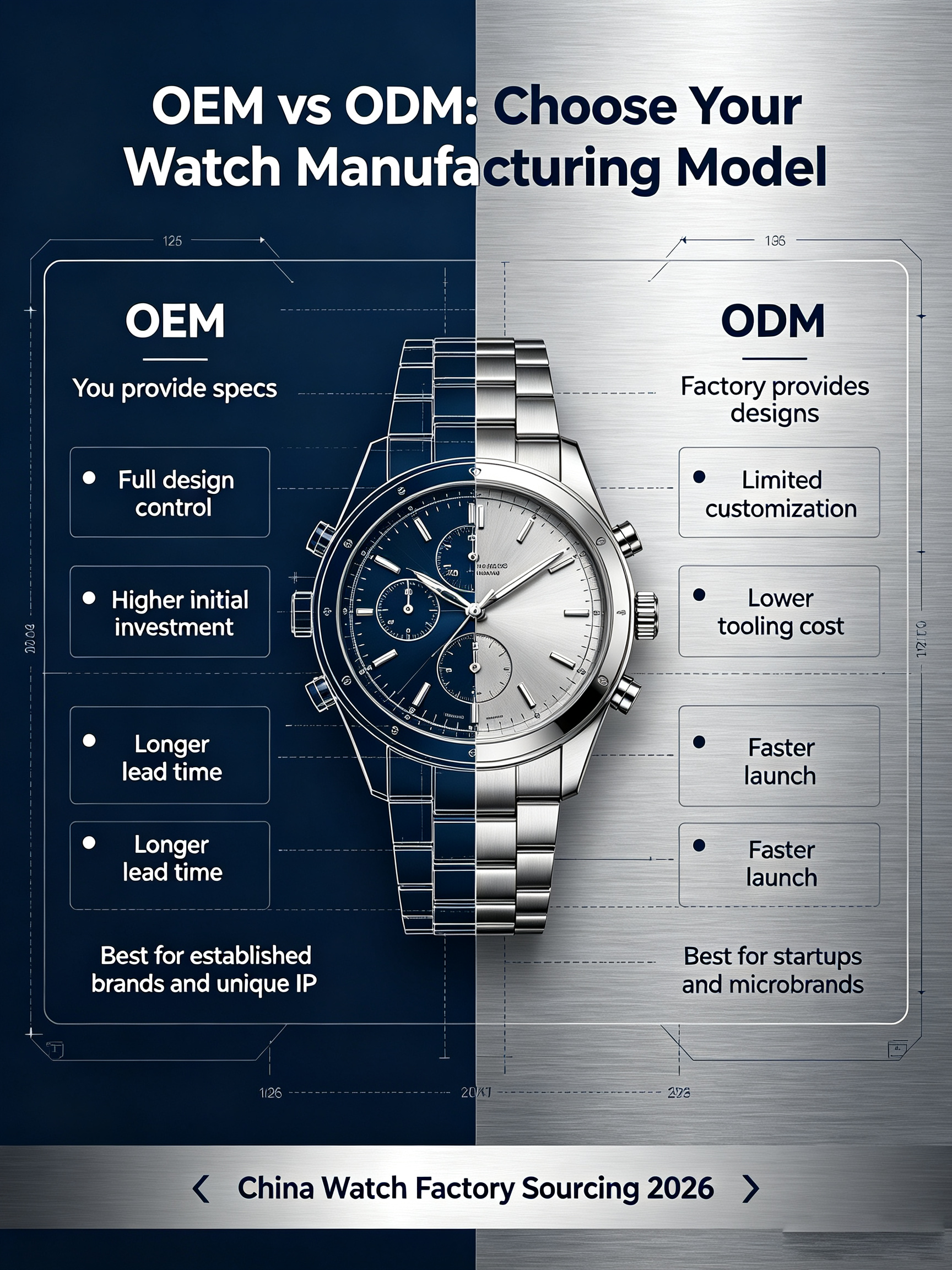
1. The Decentralized Shift: The Rise of Niche and Social Media Watch Brands
The global horology market is undergoing an era of extreme decentralization. Historically, luxury horological authority was controlled by a handful of traditional Swiss and Japanese watch conglomerates. However, the direct-to-consumer (DTC) revolution, powered by advanced localized e-commerce frameworks and hyperfocused community platforms, has redefined consumer patterns.
Today, high-profile social media content creators, professional athletic clubs, niche digital communities, and corporate enterprises are successfully establishing their own distinct social media watch brand ecosystems. They are transforming abstract online audience trust into physical, long-term brand equity.
Data from global e-commerce supply metrics indicates that niche horological microbrands are achieving compound annual growth rates outperforming mainstream fashion watch brands. This acceleration is driven by consumer demand for authenticity and identity-driven style.
When an influencer or a prestigious club designs a watch tailored specifically to their audience's lifestyle—whether it is a rugged tactical diver for an adventure community or a minimalist, architectural piece for a tech audience—they create a high level of consumer engagement. By partnering with an integrated manufacturing facility that provides end-to-end design, component matching, and movement casing, organizations can bypass traditional multi-tiered distribution channels. This optimization allows them to secure robust product margins while offering exceptional quality directly to their core audience.
2. Top 3 Strategic Use Cases for High-End Custom Brand Watches
Deploying custom watches requires a deep understanding of target audience behavior. Rather than viewing a timepiece as a generic product, sophisticated B2B buyers integrate custom timepieces into structured, scenario-driven retention frameworks. Here are the three primary commercial use cases currently driving volume across international B2B supply channels.
Scenario A: High-Tier Corporate Gift Watches & Enterprise Incentives
Corporate identity gifts frequently fail to impress executive-tier recipients due to poor quality and lack of utility. High-performance enterprise organizations utilize custom timepieces to celebrate major milestones, mark high-value mergers, or reward elite sales production.
A corporate gift watches program featuring 316L surgical stainless steel construction, a custom-engraved internal rotor visible through a sapphire crystal display caseback, and clean minimalist branding demonstrates genuine corporate gratitude and prestige.
When given to top-tier enterprise clients or key internal stakeholders, these premium watches act as continuous, subtle brand anchors. Unlike temporary digital software tokens, a premium mechanical timepiece is designed to operate flawlessly for decades. It constantly reinforces corporate alignment and builds lasting business relationships every single day.
Scenario B: Exclusive Club Logo Watches for Elite Private Organizations
Private member associations—such as high-end golf clubs, luxury yacht syndicates, prestige car clubs, and heritage collegiate societies—thrive entirely on community exclusivity and clear status markers. Commemorating entry or long-term membership with bespoke club logo watches provides members with a sophisticated, non-verbal token of belonging.
In this specialized ecosystem, design restraint is critical. The organization's emblem should not be crudely printed across the dial face. Instead, premium manufacturers use precise methods like 3D metallic appliqués applied to the dial texture, custom deep CNC milling into the crown, or clean tone-on-tone chemical engraving on the caseback. This understated approach maintains the watch's classic look while providing an elite symbol of group identity.
Scenario C: Direct-to-Consumer (DTC) Social Media Watch Brand Launches
For modern digital-native brands and content creators, expanding past basic printed apparel is essential for long-term brand monetization. Launching an exclusive, limited-edition horological collection allows these creators to establish a high-value product line that commands premium pricing.
By leveraging agile production lines, a digital-native brand can design, market, and sell custom watches directly through social media stores and independent e-commerce channels. This strategy allows brands to operate with minimal physical inventory. Utilizing a high-end ODM factory framework allows digital brands to launch sophisticated watch designs with very low upfront tooling costs, unlocking strong profit margins and deep consumer loyalty right from the initial launch.
|
Use Case Scenario
|
Primary Target Audience
|
Core Design Philosophy
|
Recommended Technical Specs
|
|
Corporate & Enterprise Gifts
|
Key Executive Clients, Board Members, Long-term Partners
|
Minimalist luxury, elegant typography, subtle caseback engraving
|
40mm Case, Sapphire Crystal, Swiss Quartz or Premium Slim Automatic
|
|
Private Clubs & Associations
|
Elite Golf, Yacht, Aviation, Luxury Automobile Members
|
Heritage styling, 3D metallic dial icons, custom deep-milled crowns
|
316L Marine Steel Case, 100M Water Resistance, Precision Chronograph Movement
|
|
Social Media DTC Brands
|
Gen-Z & Millennial Lifestyle Buyers, Community Collectors
|
Bold styling, modern color gradients, highly customizable straps
|
PVD Coated Cases, Italian Full-Grain Leather or FKM Rubber Straps, Japanese Quartz/Automatic
|
3. Engineering Excellence: Design Elements That Define a Premium Timepiece
B2B buyers, watch distributors, and retail chain owners must understand the critical component details that differentiate a high-end luxury watch from a low-cost fashion item. When customers evaluate a watch, they can immediately feel the difference in build quality, finish precision, and weight. To ensure your custom watch line commands strong market authority, several engineering standards must be enforced throughout production.
Case Metallurgy and Surface Finishing
The foundation of any high-tier watch is its case construction. Premium custom watch lines must exclusively utilize surgical-grade 316L stainless steel, processed via high-tonnage multi-stage hydraulic stamping machines followed by exact CNC multi-axis milling. The exterior surfaces should showcase a balanced combination of mirror-polished bevels and linear satin-brushed planes. The transition edges between these contrasting finishes must be distinct and razor-sharp, demonstrating top-tier manufacturing mastery.
Crystal Selection and Anti-Reflective Treatments
To guarantee complete scratch resistance, watch designers must reject standard mineral glass or plexiglass materials. True premium watch lines use authentic, lab-grown Sapphire Crystals, which rank 9 on the Mohs hardness scale—second only to diamond. To optimize legibility across varied outdoor lighting conditions, the crystal should receive a multi-layer inner anti-reflective (AR) coating. This chemical vapor deposition process eliminates blue reflections, making the crystal look nearly invisible and highlighting the intricate textures of the dial beneath.
Advanced Custom Logo Application Technologies
Applying your community or corporate emblem onto the dial face can be executed via three highly professional manufacturing methodologies:
-
Precision Silk-Screen Pad Printing: Best suited for highly intricate logos or multicolored designs. It utilizes premium Swiss-grade inks to ensure crisp text resolution down to fractions of a millimeter without bleeding.
-
High-Definition Laser Engraving: Excellent for text on casebacks, deploying fiber-laser arrays to carve ultra-crisp, permanent identifiers deep into the stainless steel matrix.
-
3D Metallic Applied Appliqués (Upraised Relief): The absolute pinnacle of luxury execution. Individual logo structures are chemically stamped out of brass or nickel plates, diamond-polished or gold-plated, and applied manually to the dial via microscopic mounting pins. This creates a striking three-dimensional effect that catches light beautifully.
Technical Quality Benchmark: A luxury custom dial should never rely on flat, basic sticker printing. Utilizing multi-layered applied indexes and 3D metallic appliqués immediately elevates the watch's perceived value, supporting higher retail pricing and reinforcing brand prestige.
4. Flexible B2B Supply Chain: Supporting Small-Batch High-End Customization
A primary obstacle preventing independent microbrands, specialty clubs, and vertical e-commerce operators from entering the custom horology sector is the high inventory requirement of traditional factories. Historically, legacy manufacturing plants demanded minimum orders of thousands of units per style, creating significant capital and inventory risk for newer businesses.
To solve this challenge, modern factory infrastructure provides an agile, flexible B2B manufacturing system designed specifically for small-batch high-end customization. By optimizing internal tooling frameworks and utilizing standardized premium component blanks—including open-mold 316L marine-grade cases, modular dial footprints, and universal movement rings—the economic minimum order barrier is significantly lowered.
This allows emerging brands to launch a custom watch collection with an entry MOQ of just 100 to 200 units per line. This flexible approach allows B2B buyers to allocate capital efficiently, avoiding heavy investments in unsold stock. Instead, you can invest resources into high-growth marketing, community development, and audience acquisition. As your initial collections sell out, integrated production lines can scale rapidly from small, introductory batches to high-volume manufacturing runs, supporting your business at every stage of expansion.
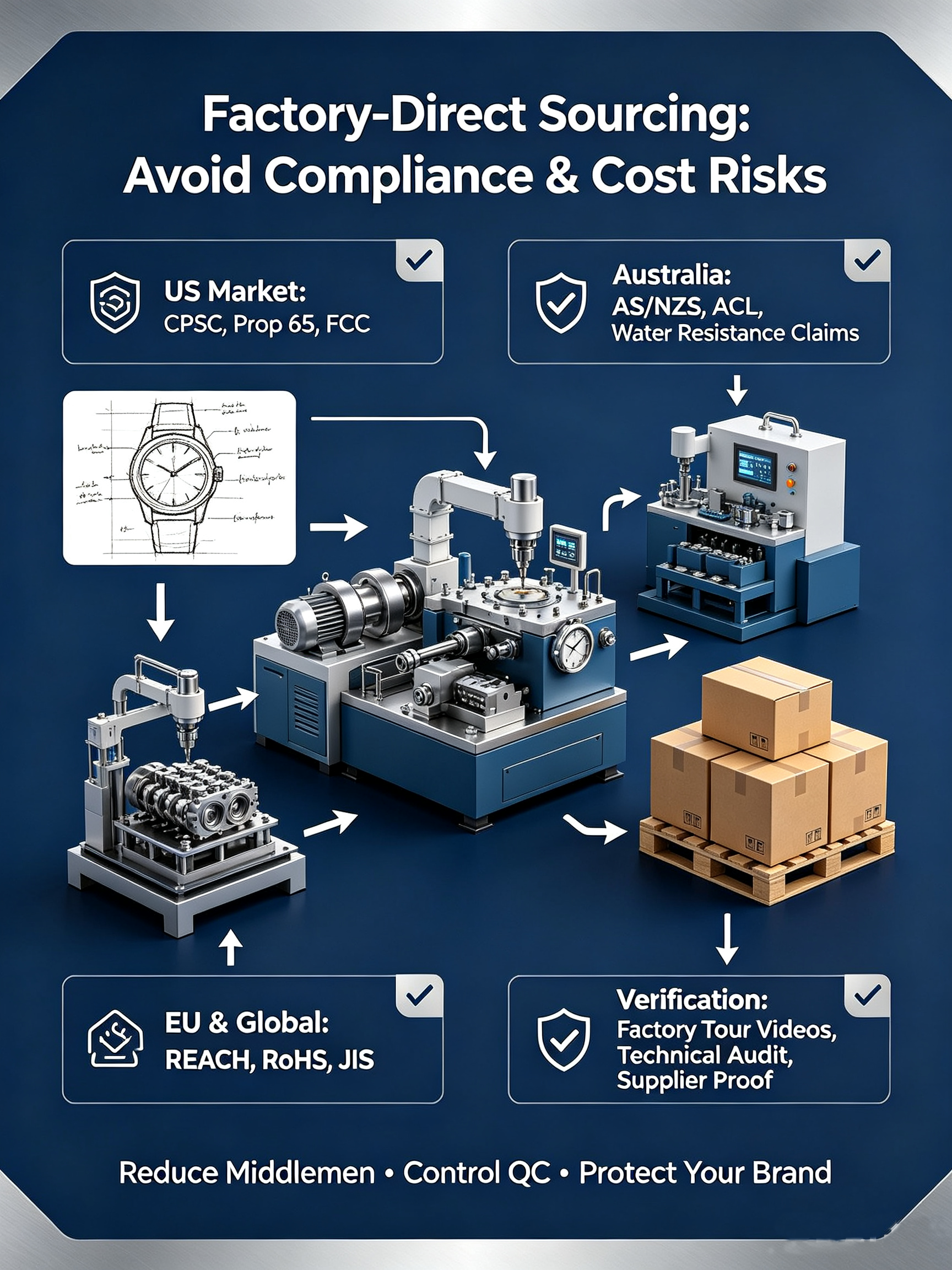
5. The Strategic Integration of Secondary Horological Support Ecosystems
Sourcing an exceptional custom watch line is only one half of the operational equation; long-term commercial success requires access to a complete lifecycle support network. Sophisticated B2B buyers must partner with manufacturers that maintain close relationships with secondary component providers and aftermarket service experts.
This collaborative approach guarantees that your brand can offer comprehensive support to your end customers over the years. The integrated manufacturing platform coordinates closely with specialized watchstrap manufacturers and watch accessory suppliers, enabling diverse customization options including premium Italian grain leather bands, highly durable FKM fluororubber sports straps, and custom-milled deployment buckles.
Additionally, solid partnerships with global watch repair services and authorized maintenance providers ensure end users can easily access replacement components, sapphire crystals, and dial parts. This multi-year service guarantee keeps your watches serviceable for decades, building long-term brand trust and reputation.
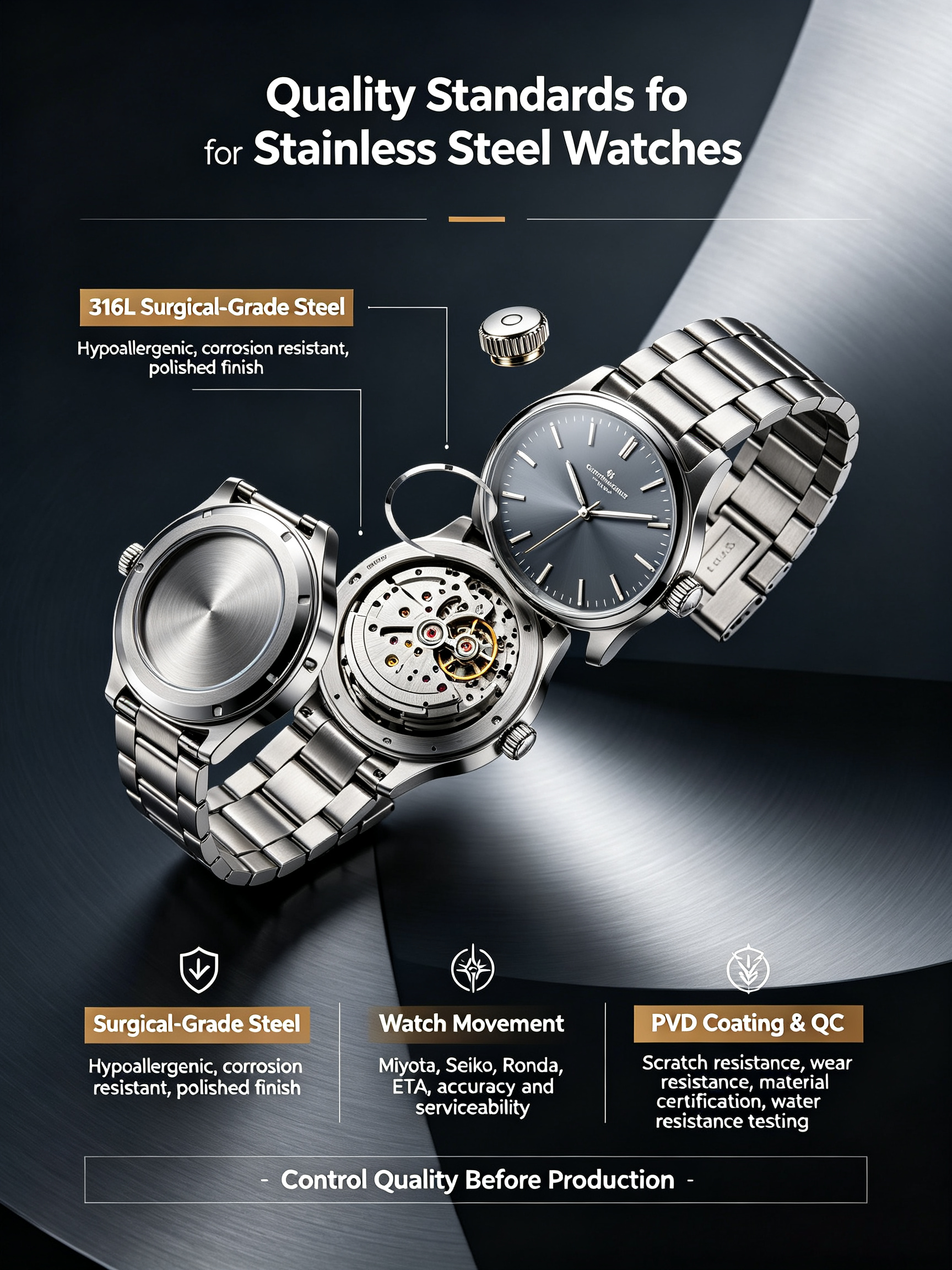
6. Operational Action Plan: From Design Blueprint to Global Delivery
To successfully execute your custom watch project with maximum speed and zero defects, the end-to-end onboarding process follows a rigorous five-stage operational framework:
1. Design & CAD Phase
Your procurement team shares vector logo files and core design ideas with the engineering team. Within 5 business days, realistic 3D CAD renders detailing every component dimension, finish texture, and printing clearance will be delivered for your approval.
2. Engineering Sampling & Prototyping
Upon blueprint approval, the project moves to physical prototyping. A fully functional pre-production watch sample is crafted for you to evaluate case weight, dial legibility, surface finishing, and overall handfeel before mass production confirmation.
3. Mass Manufacturing & Assembly
After sample approval, advanced CNC machining is deployed for mass component production. All timepieces are assembled in Class 100,000 dust-free cleanrooms by professional watchmakers, ensuring precise movement casing and perfect hand alignment.
4. Dual-Stage Quality Control
Every finished watch undergoes a 48-hour movement timing inspection, paired with automated air and water pressure testing to verify waterproof performance matching your specified depth rating, eliminating defective products.
5. Global Logistics & Delivery
Finished products are packed in custom premium presentation boxes, equipped with complete customs documentation and safety certificates, and shipped directly to your global corporate warehouses or fulfillment centers.
7. Conclusion: Partner with an Expert Custom Watch Manufacturer Today
Transitioning your organization from generic promotional products to premium, custom-branded timepieces is a highly effective strategy for building deep community loyalty and strong brand authority. Whether you are an enterprise business looking for exceptional executive gifts, an elite private club designing exclusive member insignia, or an e-commerce entrepreneur launching a new direct-to-consumer collection, choosing an expert manufacturing partner is key to success.
Advanced watch manufacturing facilities combine premium materials, precision engineering, and a flexible, low-MOQ supply chain to bring your design vision to life. Contact our B2B procurement team today to request a custom consultation, review physical component samples, and secure an optimized manufacturing quote for your upcoming launch.
8. Frequently Asked Questions for Scenario-Driven Custom Watch Sourcing
Q1: Can we incorporate different strap materials or varied dial colorways within a single small-batch order?
A1: Yes. Our flexible manufacturing system is designed to maximize variation while keeping total order costs efficient. Within a standard 200-unit production run, we allow buyers to split the order across multiple dial colors or varied strap choices (such as pairing a 316L steel bracelet with an FKM rubber or premium leather option), allowing you to offer a complete, varied collection to your community.
Q2: How is the custom branding applied to the watch crown and caseback?
A2: We use advanced fiber-laser arrays and multi-axis CNC milling machines to apply your branding. Watch crowns are typically finished with deep CNC milling or an elegant embossed logo relief. Casebacks can feature clean laser engraving or a sapphire crystal window with your custom logo printed directly onto the internal automatic movement rotor, creating an exceptional luxury finish.
Q3: Do your custom watches come with international warranty support and replacement parts?
A3: Every watch line we manufacture comes with a comprehensive 2-year warranty covering manufacturing defects. We also maintain an inventory of replacement components—including crystals, case gaskets, crowns, and matching dials—for a minimum of 5 years following your production run, ensuring your clients can access reliable, long-term repair services.
Q4: What is the total expected timeline from our initial design consultation to receiving the final product?
A4: The complete development cycle requires approximately 85 to 110 days. This includes 5 to 7 days for initial digital CAD design, 35 to 45 days to manufacture the functional physical prototype, and 45 to 60 days for mass component machining, cleanroom assembly, dual-stage quality control testing, and secure international shipping.
Q5: Are there additional setup fees for developing custom logo components?
A5: Custom logo components using pad printing plates, laser engraving programs, or standard applied dial index molds incur small, one-time engineering setup fees. For orders that meet our standard target volumes, these initial tooling fees are completely credited back to your balance invoice, lowering your total development costs.


