
For established sellers and brands in the watch industry — whether you’re a microbrand, distributor, or retailer — transitioning from generic OEM Watch partnerships to owning your custom production line can be transformative.
This guide is built for B2B buyers, including:
Watch design brands
Vertical e‑commerce platforms
Repair service providers
We’ll walk through how deep customization impacts quality, intellectual property (IP), and supply chain resilience.
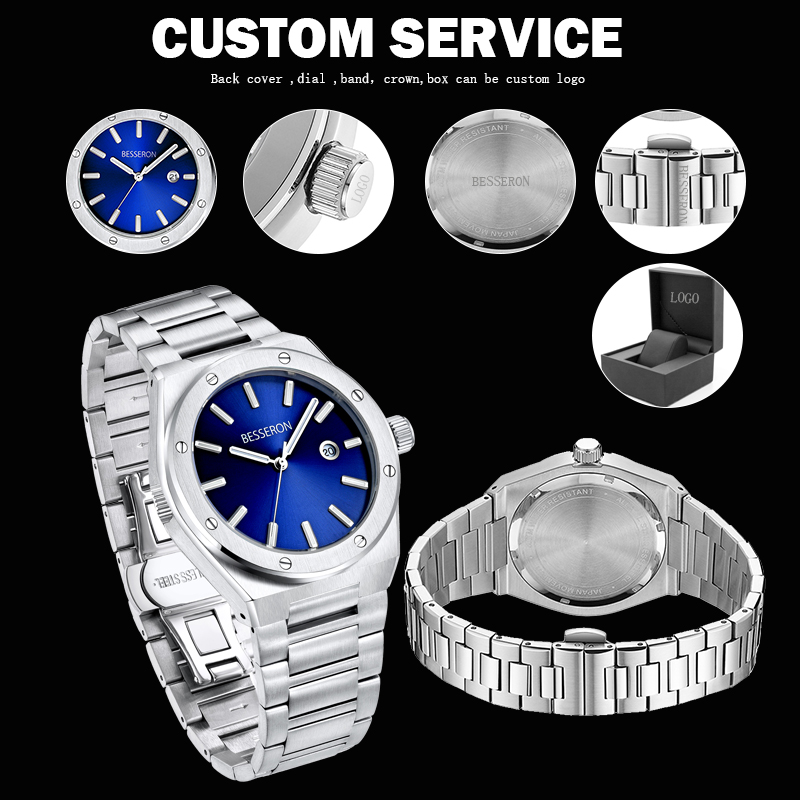
While OEM offers convenience, it often limits:
Creative control
Brand differentiation
Partnering directly with a dedicated watch manufacturer unlocks:
✅ Full IP ownership of designs
✅ Tailored materials (surgical‑grade steel, sustainable alternatives)
✅ Exclusive movements (hybrid mechanical‑quartz calibers)
Direct collaboration reduces risks such as:
Counterfeit components
Inconsistent QC standards
Logistics bottlenecks (blockchain‑based part traceability available)
Tools Used: SolidWorks, Rhino, industry‑specific CAD software
Critical Outputs:
Tolerance specs (±0.05 mm for luxury cases)
Exploded‑view assembly diagrams
📷 Example: CAD software interface vs. finished watch render
|
Phase |
Purpose |
|---|---|
|
Concept Prototype |
Non‑functional 3D‑printed sample |
|
Technical Prototype |
Test movement integration |
|
Pre‑Production Prototype |
Final materials & full functionality |
💡 Budget for 3–5 modification cycles (avg. 2–4 weeks per cycle).
Essential Standards:
ISO 22810 – Water resistance validation
EN 1811 – Nickel release compliance
COSC Chronometer Certification – Mechanical precision
|
Criterion |
OEM Partner |
Custom Manufacturer |
|---|---|---|
|
Technical Expertise |
Assembly‑focused |
R&D‑driven (in‑house movement modding) |
|
IP Protection |
Basic NDA |
Encrypted digital vaults + strict access |
|
Certifications |
ISO 9001 |
ISO 9001 + ISO 14001 + RJC |
|
Scalability |
High‑volume only |
Flexible batches (50–500 units) |
|
Transparency |
Limited audit access |
Live cams + third‑party QC reports |
|
Use Case |
Recommendation |
Cost Impact |
|---|---|---|
|
Luxury Heritage |
Swiss Mechanical |
+35–60% |
|
Fashion / Accuracy |
Seiko Mecha‑Quartz |
+25–40% |
|
Smart Hybrid |
Custom module |
Varies |
|
Rating |
Usage |
|---|---|
|
3 ATM |
Splash‑resistant (not shower‑proof) |
|
5 ATM |
Swimming‑safe |
|
20 ATM+ |
Professional diving (helium valve required) |
Shared Tooling – Split mold costs with complementary brands
Modular Designs – Interchangeable case components
Case Study:
A microbrand reduced unit cost by 22% by:
Ordering 300 cases (MOQ 200)
Using stock crystals instead of custom cuts
Consolidating shipments via Hong Kong hub
1. How do I protect designs from factory leaks?
→ Multi‑layer IP protocols:
Physically segregated design teams
Blockchain‑based DRM
Penalty‑backed NDAs ($500k+ breach clauses)
2. What if I lack technical watch vocabulary?
→ Use annotated diagrams, material swatches (316L vs. 904L steel), and movement disassembly videos.
3. Can I audit factories remotely?
→ Yes — request live video tours, timestamped QC reports, and third‑party audits (SGS, TÜV).
4. How long does full customization take?
Simple mods: 8–12 weeks
Ground‑up design: 6–18 months (includes movement certification)
5. Do manufacturers help with logistics?
→ Advanced partners offer drop‑shipping, spare parts kitting, and customs documentation prep.
📷 Factory engineer conducting water resistance test

