
If you're launching or expanding a watch brand, choosing the right OEM or ODM watch manufacturer in China depends on your business goals. OEM manufacturing is ideal for brands with original designs that need complete customization, while ODM manufacturing suits businesses seeking faster product launches using proven factory designs. A reliable Chinese watch factory should offer 316L stainless steel cases, Japanese or Swiss movements, international compliance certifications, flexible MOQs, transparent quality control, and end-to-end production support.
The global watch industry is experiencing a remarkable transformation. Independent watch brands, microbrands, private label businesses, e-commerce retailers, and luxury lifestyle companies are introducing new collections at an unprecedented pace. According to industry research from Statista and the Federation of the Swiss Watch Industry (FH), demand for customized watches continues to grow as consumers increasingly seek products that reflect their personal identity rather than mass-market designs.
This trend has created significant opportunities for B2B buyers. Instead of investing millions in building their own manufacturing facilities, many successful watch brands collaborate with experienced OEM and ODM watch manufacturers in China. These partnerships enable companies to reduce production costs, shorten development cycles, and access decades of manufacturing expertise.
China has evolved far beyond being simply a low-cost production base. Today, the country's leading watch factories manufacture premium stainless steel watches using advanced CNC machining, automated polishing systems, Japanese and Swiss movements, sapphire crystal, and international quality management systems. Many factories now serve established European brands, North American microbrands, Australian retailers, and emerging direct-to-consumer watch companies.
However, selecting the right manufacturing partner remains one of the most critical decisions for any watch business. Choosing an unsuitable supplier can result in delayed production, inconsistent quality, compliance issues, and significant financial losses.
This comprehensive guide explains how to evaluate OEM and ODM watch manufacturers from a professional procurement perspective. Whether you are launching your first microbrand in New York, expanding a private label business in Australia, supplying retail chains across Europe, or building a premium stainless steel collection, this guide will help you make informed sourcing decisions.
Over the past two decades, China has become the world's largest manufacturing hub for custom watches. This leadership position is not based solely on competitive pricing—it is driven by mature supply chains, advanced production technologies, skilled engineering teams, and efficient manufacturing ecosystems.
Today's leading Chinese watch manufacturers provide comprehensive services that extend far beyond production.
These services often include:
This one-stop manufacturing model significantly reduces communication complexity for overseas buyers.
For example, instead of coordinating with separate suppliers for cases, dials, straps, movements, packaging, and assembly, buyers can work with one experienced manufacturing partner responsible for the entire production process.
| Advantage | Business Value |
|---|---|
| Complete supply chain | Faster development cycles |
| Competitive labor costs | Lower production expenses |
| Large manufacturing capacity | Stable long-term supply |
| Advanced CNC technology | High precision components |
| Experienced engineering teams | Better product quality |
| Flexible customization | Stronger brand differentiation |
| Global export experience | Easier international compliance |
Many successful microbrands in the United States and Europe rely on Chinese OEM partners while focusing their internal resources on branding, marketing, community building, and customer service.
This business model allows entrepreneurs to compete with established luxury brands without investing in expensive manufacturing infrastructure.
Understanding the difference between OEM and ODM manufacturing is essential before contacting any watch factory.
Although these terms are frequently used interchangeably, they represent two distinct manufacturing approaches.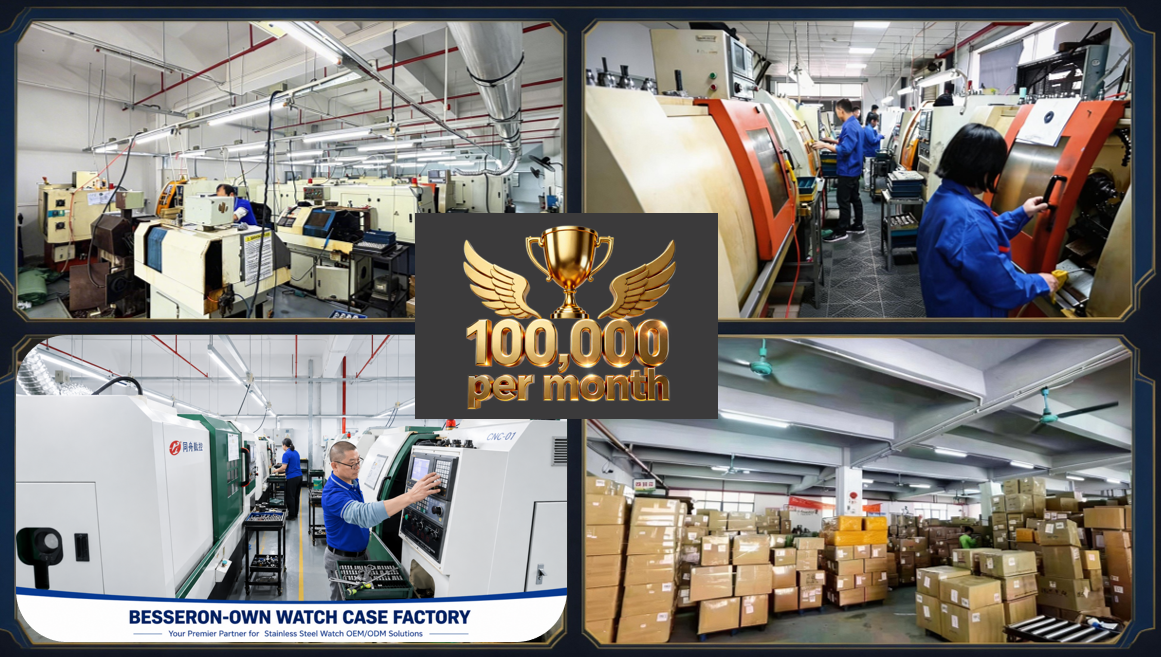
OEM manufacturing means the customer owns the product design.
The brand develops the watch concept and provides specifications such as:
The manufacturer then produces the watch according to these specifications.
OEM is the preferred option for brands seeking complete product differentiation.
Typical OEM buyers include:
However, OEM generally requires:
ODM manufacturing works differently.
The factory already owns a portfolio of proven watch designs.
The buyer selects an existing design and customizes elements such as:
Since the core engineering has already been completed, production begins much faster.
ODM is particularly attractive for:
| Feature | OEM | ODM |
|---|---|---|
| Product Design | Customer | Factory |
| Development Time | Longer | Faster |
| Tooling Cost | Higher | Lower |
| Product Exclusivity | Excellent | Moderate |
| MOQ | Usually Higher | Usually Lower |
| Customization | Unlimited | Partial |
| Brand Differentiation | Highest | Medium |
| Suitable For | Established Brands | New Brands |
Selecting OEM or ODM depends on your business strategy rather than your company size.
✓ Have original watch designs
✓ Need exclusive products
✓ Want long-term brand value
✓ Target premium price positioning
✓ Protect intellectual property
✓ Build a luxury or microbrand identity
For example, many successful American microbrands choose OEM because originality is central to their brand story.
✓ Need rapid market entry
✓ Have limited startup capital
✓ Want to test product demand
✓ Require lower development costs
✓ Sell through Amazon or Shopify
✓ Operate seasonal product lines
Many Australian retailers use ODM manufacturing to introduce private label collections while minimizing financial risk.
An increasingly popular strategy combines both models.
Many experienced manufacturers first help customers launch with ODM products.
Once the brand establishes market traction, they gradually transition into full OEM development.
This approach reduces financial risk while allowing continuous product innovation.
Material quality is one of the most important indicators of a watch's value.
While inexpensive watches often use alloy or low-grade stainless steel, premium brands almost always choose 316L stainless steel.
316L stainless steel contains molybdenum, significantly improving corrosion resistance compared with standard stainless steels.
Advantages include:
For customers in coastal regions such as Australia, California, or Florida, corrosion resistance becomes particularly important due to humidity and salt exposure.
| Feature | 316L | 304 |
|---|---|---|
| Corrosion Resistance | Excellent | Good |
| Salt Water Resistance | Excellent | Moderate |
| Skin Friendliness | Excellent | Good |
| Premium Brand Usage | Very Common | Less Common |
| Manufacturing Cost | Higher | Lower |
| Luxury Positioning | Excellent | Moderate |
Because of these advantages, most premium OEM watch manufacturers recommend 316L stainless steel for mid-to-high-end watch brands targeting North America and Europe.
The movement is often considered the heart of a watch. For B2B buyers sourcing OEM or ODM watches, selecting the right movement directly affects product positioning, pricing strategy, customer perception, and long-term brand value.
A professional OEM watch manufacturer should provide multiple movement options based on the target market, price range, and brand positioning.
The most commonly used movements in international custom watch production include:
The choice is not simply about choosing the most expensive movement. Instead, successful brands select movements based on the balance between reliability, cost efficiency, and customer expectations.
Japanese movements from manufacturers such as Miyota and Seiko Instruments are widely used by global microbrands and private label watch companies.
They are popular because they provide:
Miyota movements, produced by Citizen Group, are especially popular among independent watch brands.
Common models include:
| Movement | Type | Application |
|---|---|---|
| Miyota 2035 | Quartz | Fashion watches, affordable collections |
| Miyota 2115 | Quartz | Everyday watches |
| Miyota 8215 | Automatic | Entry-level mechanical watches |
| Miyota 9015 | Automatic | Premium microbrand watches |
The Miyota 9015 automatic movement, for example, is often selected by brands seeking Swiss-style mechanical performance at a more accessible production cost.
Swiss movements remain highly respected because Switzerland has historically represented precision watchmaking.
Common Swiss movement suppliers include:
Swiss movements offer:
However, Swiss movements usually increase product costs significantly.
For many emerging watch brands, using Swiss movements too early can reduce profit margins without necessarily improving market acceptance.
| Category | Japanese Movement | Swiss Movement |
|---|---|---|
| Cost | Lower | Higher |
| Reliability | Excellent | Excellent |
| Brand Recognition | High | Very High |
| Maintenance Cost | Lower | Higher |
| Suitable Price Range | $100-$800 watches | $500-$5000+ watches |
| Microbrand Adoption | Very Common | Selective |
| Production Availability | High | Moderate |
For most new and growing brands:
Entry-Level Collection
Recommended:
Target retail price:
$80-$300
Mid-Range Microbrand Collection
Recommended:
Target retail price:
$300-$1000
Luxury Mechanical Collection
Recommended:
Target retail price:
$1000+
A professional OEM ODM watch manufacturer should not simply recommend the most expensive option. Instead, the manufacturer should analyze:
and recommend the most commercially viable movement solution.
For modern watch brands, appearance is not only determined by case design. Surface treatment technology plays a critical role in creating premium product value.
One of the most common technologies used in high-end stainless steel watches is:
PVD is an advanced surface coating process that deposits a thin protective layer onto stainless steel components.
It is widely used for:
Compared with traditional electroplating, PVD coating creates a harder surface layer.
This helps watches maintain their appearance during daily use.
PVD allows manufacturers to create:
This provides brands with more design possibilities.
For customers in markets such as:
where watches are frequently exposed to sweat, humidity, and outdoor environments, durable surface treatment improves customer satisfaction.
| Feature | PVD Coating | Traditional Plating |
|---|---|---|
| Durability | Higher | Moderate |
| Scratch Resistance | Excellent | Average |
| Color Stability | Better | Lower |
| Environmental Impact | Lower | Higher |
| Premium Watch Usage | Common | Limited |
For mid-to-high-end stainless steel watch brands, combining:
creates a product specification that meets international premium market expectations.
Choosing a watch factory is one of the most important decisions for any brand owner.
A low-price supplier may appear attractive initially, but poor manufacturing capability can create serious problems:
Professional buyers should evaluate manufacturers based on multiple factors.
Experience matters because watch production involves hundreds of precision processes.
A qualified manufacturer should understand:
A factory with decades of experience can identify potential problems before mass production.
Before cooperation, buyers should evaluate:
Important indicators:
Ask:
A reliable partner should have sufficient capacity for both small brands and large-scale orders.
A modern OEM watch manufacturer should provide more than production.
The ideal partner should support:
Including:
Including:
Including:
This capability is especially valuable for startup watch brands that have creative ideas but limited manufacturing experience.
Quality control separates professional manufacturers from trading companies.
A complete watch QC system should include:
Checking:
Monitoring:
Testing:
For international B2B buyers, certifications such as:
can provide additional confidence.
For brands selling watches internationally, compliance is not optional.
Many new brands focus heavily on design and price but underestimate regulatory requirements.
A professional OEM ODM watch manufacturer should understand destination-market regulations and provide necessary documentation.
The Consumer Product Safety Commission (CPSC) oversees consumer product safety requirements in the United States.
For watches, manufacturers should pay attention to:
California Proposition 65 requires businesses to provide warnings about significant exposure to chemicals that may cause:
For watches, attention areas include:
Professional manufacturers should conduct material testing to reduce compliance risks.
Australian buyers should consider:
Australia and New Zealand use the AS/NZS standards system covering product safety and consumer protection.
Although watches are not regulated in the same way as some electrical products, responsible suppliers should provide:
For Australian retailers and private label brands, working with a manufacturer familiar with export compliance reduces import risks.
For many international watch brands, choosing a direct OEM watch manufacturer is not only a production decision—it is a strategic business decision.
Working directly with a professional watch factory eliminates unnecessary middlemen, improves communication efficiency, and provides greater control over product quality, pricing, and customization.
For startups, microbrands, and private label businesses, manufacturing directly with an experienced Chinese watch factory creates several competitive advantages.
When brands purchase through trading companies or multiple suppliers, additional costs are often added throughout the supply chain:
A direct factory partnership allows brands to access:
This is especially important for emerging watch brands that need to balance:
A professional watch manufacturer should provide complete product development support from concept to final delivery.
The typical process includes:
The factory analyzes:
Example:
A New York microbrand targeting young professionals may require:
A fashion retailer may prefer:
The manufacturer supports:
This allows brands without engineering teams to transform ideas into manufacturable products.
Before mass production, professional factories create samples for:
Prototype development helps identify:
before large investment.
After sample approval, production begins.
A complete manufacturing process includes:
One of the most common questions from B2B buyers is:
“How long does it take to produce custom watches?”
The answer depends on:
However, a professional OEM watch manufacturer typically follows this timeline:
| Manufacturing Stage | Estimated Time |
|---|---|
| Design discussion | 3–7 days |
| Engineering confirmation | 7–15 days |
| Prototype production | 15–30 days |
| Sample approval | 3–7 days |
| Mass production | 30–60 days |
| Final inspection & shipping | 5–10 days |
Total timeline:
Approximately 60–90 days for most customized watch projects.
For ODM projects using existing designs, the timeline can often be shorter because engineering development is already completed.
For watch brands, quality problems are not just manufacturing issues.
They directly impact:
Therefore, selecting a manufacturer with a strong QC system is essential.
Before production:
Verify:
During production:
Check:
Before Shipment:
Including:
Testing options:
Checking:
Including:
A reliable manufacturer should provide inspection reports and maintain traceable quality procedures.
Choosing the right manufacturing partner means choosing a company that can support your brand growth—not only produce watches.
Geren (HK) Group Co., Limited operates as an experienced OEM and ODM watch manufacturer specializing in customized stainless steel watches for global brands.
With decades of manufacturing experience, the company supports international customers including:
Support includes:
Specialized products include:
Manufacturing systems include:
Products can support international market requirements including:
A professional manufacturing partner should have:
These capabilities allow brands to move from product ideas to commercial collections efficiently.
Before placing your first order, evaluate your supplier with this checklist:
| Evaluation Area | Questions To Ask |
|---|---|
| Experience | How many years have you manufactured watches? |
| Factory | Do you own production facilities? |
| Customization | Can you customize dial, case, strap, packaging? |
| Materials | Do you use 316L stainless steel? |
| Movement | Which movement brands are available? |
| Quality | What QC process do you follow? |
| Certification | Can you provide compliance documents? |
| MOQ | What is your minimum order quantity? |
| Samples | How long does prototype development take? |
| Communication | Do you provide engineering support? |
A trustworthy supplier should answer these questions clearly and provide transparent information.
The MOQ depends on:
For many OEM and private label watch projects, MOQ commonly ranges from hundreds to thousands of pieces.
ODM projects usually allow more flexible quantities because the basic design already exists.
A typical custom watch prototype requires approximately 15–30 days depending on:
Simple ODM customization can usually be completed faster.
Yes.
Many successful independent watch brands start by working with OEM/ODM manufacturers.
A professional factory can help with:
This allows entrepreneurs to focus on branding and marketing.
For mid-to-high-end watches, recommended specifications include:
These materials improve product perception and customer satisfaction.
Choose OEM if:
Choose ODM if:
Many successful brands combine both approaches.
The ideal manufacturing partner should provide more than competitive pricing.
A professional manufacturer should offer:
For microbrands, private label companies, retailers, and distributors, working directly with an experienced watch factory creates opportunities to develop unique products while maintaining competitive costs.
The future of watch branding is not only about selling timepieces—it is about creating products with strong design identity, reliable quality, and meaningful brand stories.
Partnering with the right OEM ODM watch manufacturer allows your business to transform ideas into market-ready collections.
Looking for a reliable OEM & ODM watch manufacturer in China?
BESSERON WATCH MANUFACTURER provides:
✓ Custom stainless steel watches
✓ Private label watch solutions
✓ OEM & ODM development
✓ Logo and packaging customization
✓ Professional production support
Get your free watch design consultation and logo mockup today.
Start building your watch brand with a trusted manufacturing partner.

