For global watch brands, microbrands, distributors, and e-commerce operators in the US, Europe, and Australia, choosing between OEM and ODM watch manufacturing models is one of the most critical strategic decisions.
This choice directly impacts:
- Product development cost
- Time to market
- Brand differentiation
- Intellectual property ownership
- Long-term scalability
Understanding the difference between OEM and ODM helps brands reduce risk and optimize manufacturing strategy in a highly competitive watch industry.
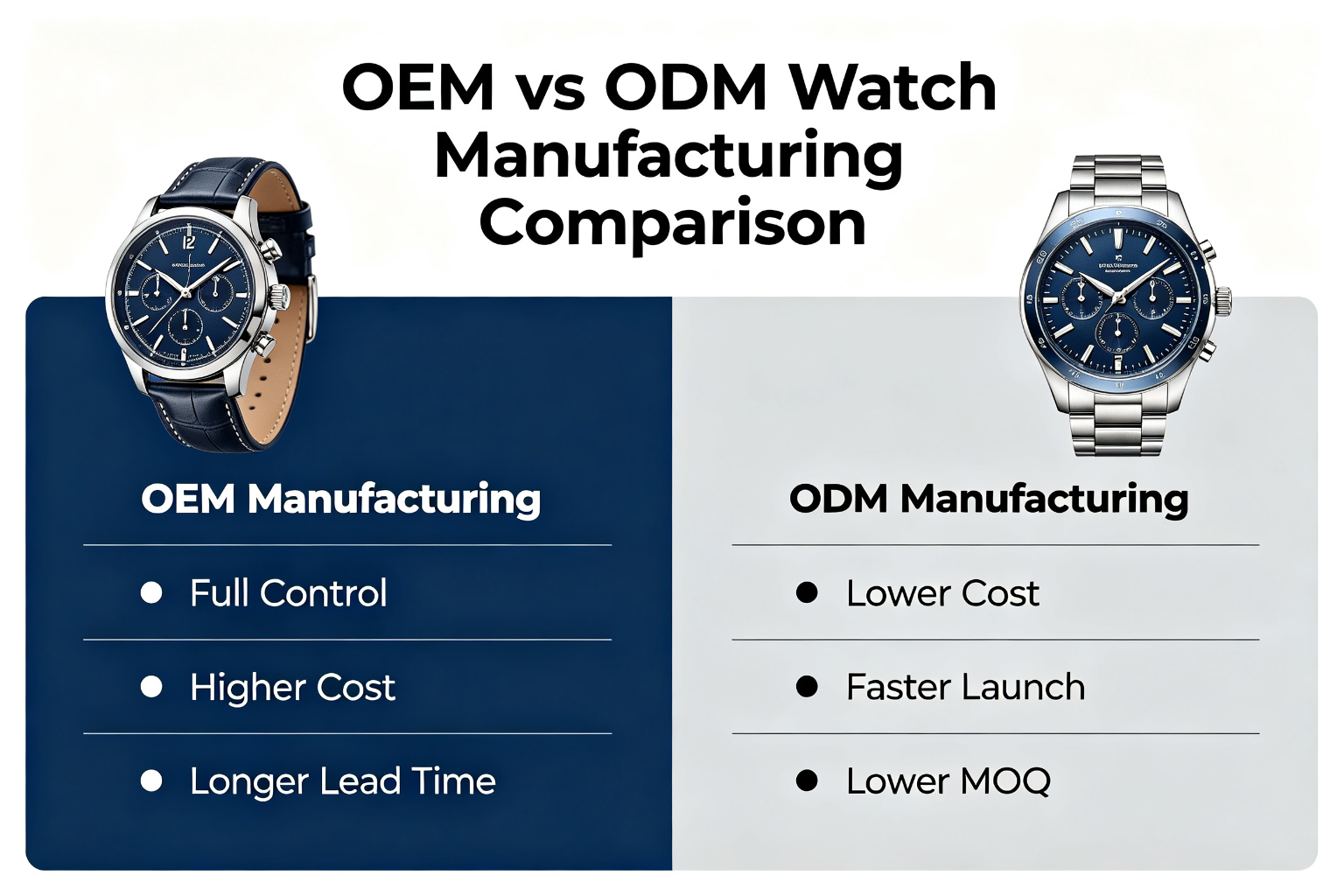
OEM (Original Equipment Manufacturing) refers to a production model where the brand provides full technical specifications, and the factory produces according to those requirements.
Key Characteristics of OEM
OEM watch manufacturing typically includes:
- Full CAD drawings provided by the brand
- Defined case, dial, and movement specifications
- Material selection (e.g., 316L stainless steel, titanium)
- Defined tolerances and engineering requirements
- Strict quality control standards
OEM Control Advantage
OEM gives brands full control over:
- Product design
- Intellectual property (IP)
- Technical architecture
- Brand differentiation
This model is widely used by established watch brands that require unique product identity and long-term design ownership.
Key Insight for Buyers
OEM is best suited for brands that:
- Already have market validation
- Require proprietary design structures
- Focus on long-term brand equity
- Can support higher development investment
ODM (Original Design Manufacturing) is a factory-led development model where manufacturers provide pre-designed watch platforms that clients can customize.
Key Characteristics of ODM
ODM typically includes:
- Pre-developed watch models (platform designs)
- Modular components (cases, dials, straps)
- Custom branding options
- Fast customization workflows
- Lower development complexity
ODM Speed Advantage
ODM allows brands to launch products in:
- 8–12 weeks (typical ODM cycle)
compared to
- 12–24 months (OEM full development cycle)
Key Insight for Buyers
ODM is ideal for:
- Startups and microbrands
- First-time product launches
- Budget-sensitive projects
- Fast market testing strategies
3. OEM vs ODM Key Differences
The table below highlights the core differences between the two manufacturing models:
| Factor |
OEM Manufacturing |
ODM Manufacturing |
| Design Ownership |
Full brand ownership |
Factory-based platform design |
| Cost Structure |
High (tooling + engineering) |
Lower entry cost |
| Development Time |
12–24 months |
8–12 weeks |
| MOQ Requirement |
500–1000+ units |
100–300 units |
| Customization Level |
Fully flexible |
Platform-based customization |
| IP Control |
Full IP ownership |
Shared / limited IP |
Key Takeaway
OEM prioritizes brand uniqueness, while ODM prioritizes speed and efficiency.
For emerging watch brands, ODM is often the most practical entry strategy.
Advantages of ODM for Startups
- Lower financial risk
- Faster time to market
- Pre-tested designs
- Reduced engineering complexity
Operational Benefits
ODM platforms often include:
- Verified movement integration
- Pre-approved waterproof structures (100–200M)
- Standardized case architectures
- Ready-to-use dial layouts
Market Strategy Insight
Many successful microbrands begin with ODM, validate market demand, and then transition into OEM development once revenue stabilizes.
OEM manufacturing is preferred by established brands seeking differentiation and technical exclusivity.
OEM Advantages
- Fully customized watch architecture
- Exclusive dial and case designs
- Advanced movement integration
- Premium material usage
High-End Engineering Capabilities
OEM supports:
- Ceramic bezels (high hardness resistance)
- Swiss automatic movements
- Complex chronograph systems
- Advanced surface finishing (PVD, brushing, polishing)
Investment Consideration
OEM requires:
- Higher upfront tooling investment
- Longer development cycles
- Strict technical validation process
However, it delivers stronger brand positioning and long-term value.
6. Cost Structure Comparison
Understanding cost structure is essential for procurement planning.
| Cost Component |
OEM |
ODM |
| Development Cost |
$100K–$300K+ |
$10K–$50K |
| Unit Cost |
Higher ($150–$400) |
Lower ($60–$200) |
| Tooling Investment |
Required |
Minimal |
| Hidden Costs |
Certification, prototyping |
Limited customization fees |
Business Insight
ODM reduces entry cost by up to 70–80%, making it ideal for early-stage brand validation.
7. Hybrid OEM + ODM Manufacturing Model
Modern watch brands increasingly adopt a hybrid strategy combining both OEM and ODM.
How the Hybrid Model Works
- ODM for market entry (fast launch)
- Product validation through sales data
- OEM upgrade for successful SKUs
- Long-term brand customization expansion
Real Business Advantage
This model allows brands to:
- Reduce initial investment risk
- Test multiple designs quickly
- Scale only successful products
- Build long-term brand identity gradually
Industry Trend
Hybrid manufacturing is now widely used by fast-growing microbrands in Europe and North America.
8. OEM & ODM Manufacturing Capabilities Overview
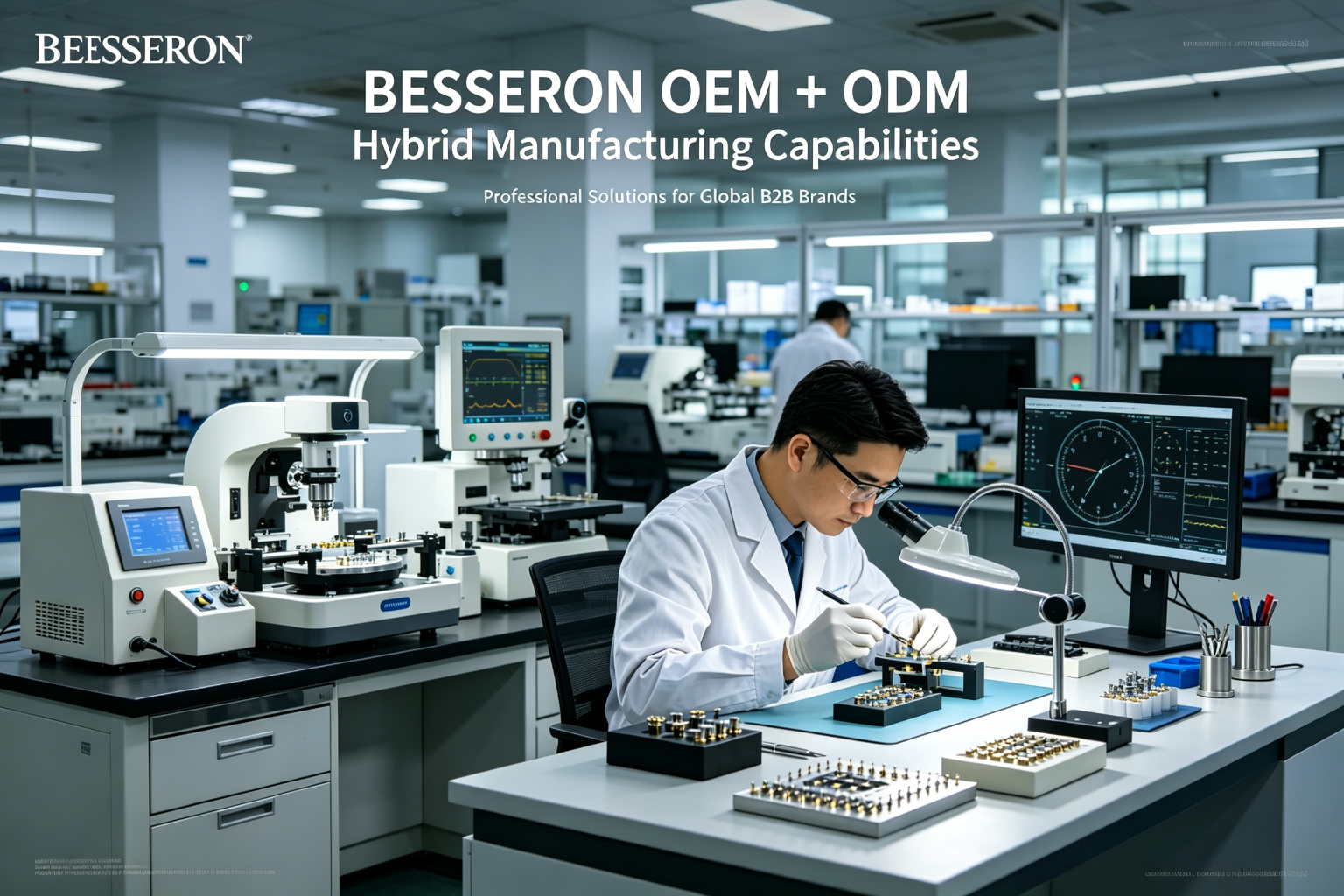
Experienced factories with 16+ years of production expertise typically provide:
Core Manufacturing Strengths
- Integrated OEM + ODM production system
- Precision CNC machining (micron-level accuracy)
- Stable movement sourcing (Swiss & Japanese options)
- Multi-layer QC systems
Engineering Advantages
- High-precision case manufacturing
- Stable dial printing systems
- Waterproof testing up to 50ATM
- Long-term durability validation
Supply Chain Stability
- Dual sourcing for key components
- Standardized production platforms
- Global compliance (CE / RoHS / REACH)
Conclusion: Choosing the Right Manufacturing Model
The decision between OEM and ODM is not just technical—it is strategic.
OEM is best for:
- Established brands
- High-end product positioning
- Full IP ownership requirements
ODM is best for:
- Startups and microbrands
- Fast market entry
- Lower budget launches
Hybrid is best for:
- Scaling brands
- Data-driven product expansion
- Long-term portfolio development
FAQ: OEM vs ODM Watch Manufacturing
Q1: Can I switch from ODM to OEM later?
Yes. Many brands start with ODM and transition to OEM after validating market demand.
Q2: What is the typical MOQ for ODM watches?
ODM usually starts from 100–300 units depending on customization level.
Q3: How long does OEM watch development take?
OEM projects typically require 12–24 months from design to production.
Q4: Which model is better for microbrands?
ODM is generally better for microbrands due to lower cost and faster launch cycles.
Q5: Can OEM and ODM be combined?
Yes. Hybrid models combining ODM platforms with OEM customization are increasingly common.


