Private Label manufacturing, often synonymous with White Label production, is a strategic business model where you, the brand owner or retailer, provide your brand identity, design specifications (or choose from existing designs), and market vision. A specialized manufacturing partner then handles the entire production process – from sourcing components and assembly to quality control – delivering finished watches ready for your brand's packaging and distribution. Essentially, you bring the brand, the factory brings the production expertise.
This model is particularly advantageous for:
- E-commerce Sellers & Retailers: Expanding product lines without the complexities of manufacturing, focusing instead on sales channels and customer acquisition.
- Brand Incubators & Agencies: Developing and launching new watch brands for clients or internal projects rapidly.
- Existing Watch Brands: Diversifying collections, creating sub-brands, or accessing specific manufacturing capabilities not available in-house.
- Microbrands & Independent Designers: Bringing unique watch concepts to life without massive capital investment in tooling and production setup.
For businesses ranging from high-end watch brand owners and specialized watch design studios to watch distributors, vertical watch e-commerce platforms, watch chain retailers, specialty watch boutiques, and even **watch repair, Private Label manufacturing offers a scalable and efficient path to market.
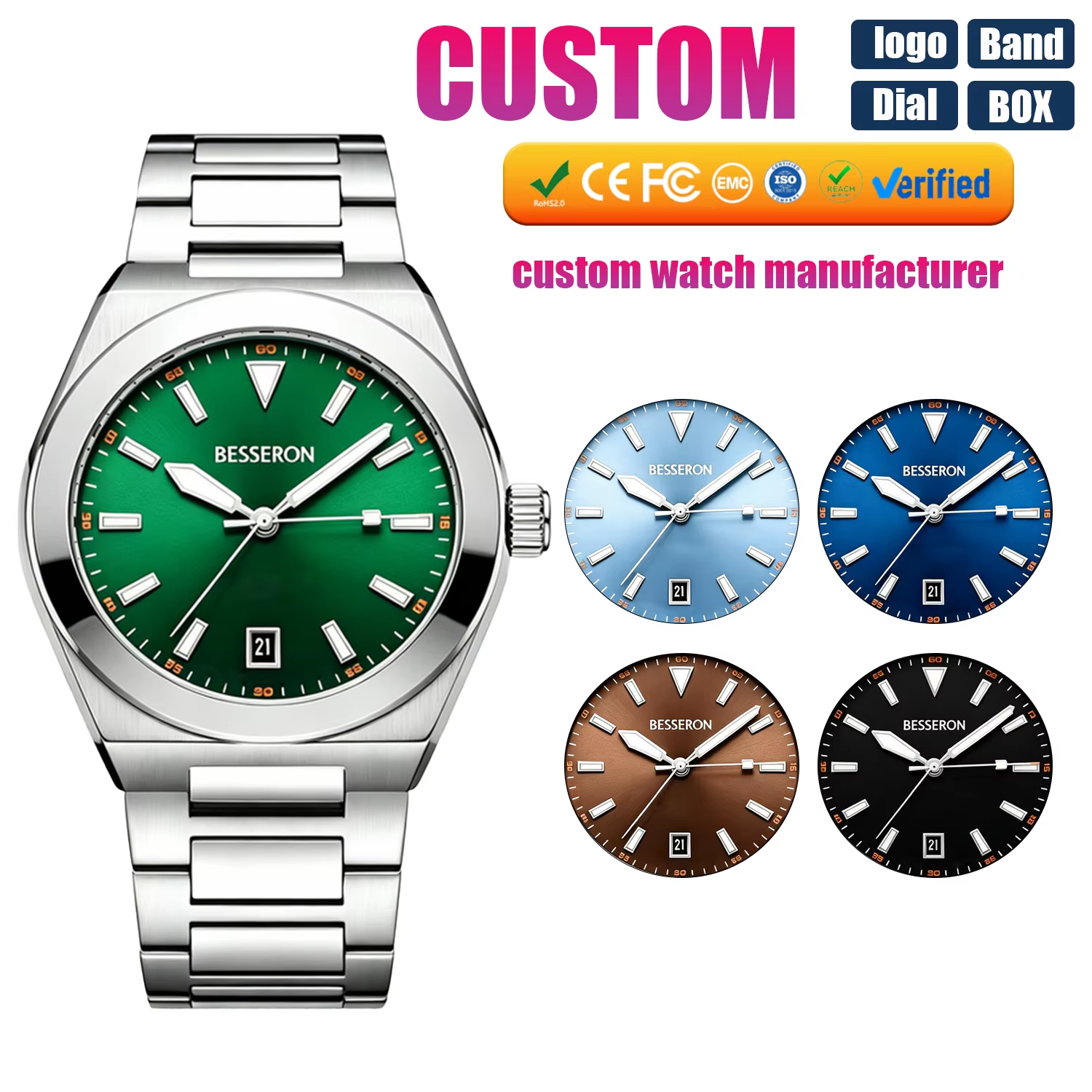
Why Partner with a Dedicated Watch Production Company for Your Private Label Watch Needs?
Choosing a specialized watch manufacturer over a general contract manufacturer or attempting in-house production offers distinct competitive advantages:
- Eliminate Capital & Operational Overhead: Forget the immense costs and complexities of setting up your own watch factory – sourcing machinery (precision lathes, CNC machines, assembly lines, testing equipment), hiring skilled labor (watchmakers, quality control technicians, engineers), managing supply chains for movements, cases, dials, hands, crystals, straps, clasps, and packaging. A professional partner absorbs these costs, capital in marketing, branding, and sales growth.
- Accelerate Time-to-Market: Leverage the manufacturer's existing infrastructure, expertise, and established relationships with component suppliers (including specialized watch band manufacturers, watch accessory manufacturers, and watch component suppliers). This significantly shortens development and production cycles compared to starting from scratch. You can respond faster to market trends and customer demands.
- Flexibility & Scalability: Easily scale production volumes up or down based on demand without worrying about idle machinery or workforce management. A good partner offers flexibility in Minimum Order Quantities (MOQs), allowing even microbrands to start cost-effectively. Adapt your product line quickly to incorporate new trends or discontinue underperformers.
- Guaranteed Quality & Expertise: Access deep-rooted horological knowledge and stringent quality control processes inherent to specialized watch manufacturers. They understand the precision required for movements (quartz, mechanical, automatic), case finishing, water resistance testing, and long-term reliability – crucial for building a reputable brand. Consistent quality becomes your brand's strongest asset.
- Enhanced Brand Credibility: Partnering with a recognized, professional manufacturer provides inherent credibility. It signals to retailers, distributors (watch distributors), and end consumers that your products are manufactured to high standards. This is especially important for new entrants or brands expanding into the watch category.
- Access to Advanced Capabilities: Benefit from the manufacturer's investments in technology, materials (like specialized alloys for watch band manufacturers), and techniques (such as PVD coating, intricate dial printing, or complications assembly) that might be prohibitively expensive for a single brand to develop independently.
6 Critical Questions to Ask Potential Private Label Watch Partners
Before committing to a manufacturing partner, due diligence is paramount. Here are essential questions tailored for B2B buyers like high-end watch brand owners, ** boutiques**:
- Do You Offer Full Private Label Capabilities (No Factory Branding)? Ensure the manufacturer can produce watches with only your brand's logos, markings, and design elements – no trace of their own brand identity on the watch case, dial, movement, or clasp. This is non-negotiable for true brand ownership.
- Do You Provide Comprehensive Packaging & Brand Material Support? Can they design and produce custom boxes, inserts, instruction manuals, warranty cards, hang tags, and other brand-specific materials? Seamless integration of packaging with the product enhances brand perception. Do they in-house design capabilities or work with partners?
- Do You Have a Portfolio of Existing Watch Designs Available for Private Labeling? For faster market entry, inquire about their catalog of ready-made designs (cases, dials, hands, strap combinations) that can be customized with your branding. This is ideal for retailers or e-commerce sellers needing quick inventory. Assess the style, quality, and uniqueness of these designs.
- Can You Support Sales Across Multiple Channels (Amazon FBA, Shopify, Wholesale, Brick-and-Mortar Retail)? Ensure the manufacturer understands the requirements of your target sales channels. Can they provide products compliant with Amazon's packaging requirements? Are they familiar with the logistics and labeling needed for wholesale distribution to watch chain retailers or specialty watch boutiques? Do they offer drop-shipping capabilities?
- What Are Your Minimum Order Quantities (MOQs) Per Model/SKU? MOQs can vary significantly. Clarify if MOQs are per watch model, per strap variation, or per specific component. Understand the cost implications of different MOQ tiers and whether they offer flexibility, especially for initial launches or microbrands.
- What Quality Certifications and Production Standards Do You Adhere To? Inquire about their Quality Management System (e.g., ISO 9001), testing procedures (water resistance, accuracy, functionality), materials traceability, and compliance with relevant international standards (e.g., CE marking, RoHS). Ask for details on their quality control process at each production stage.
Success Story: From Concept to $500k Monthly Sales in 6 Months
Consider the journey of "Horizon Timepieces," an ambitious e-commerce seller targeting the premium men's accessories market. Recognizing a gap for well-designed, affordable automatic watches, they opted for Private Label manufacturing.
- Challenge: Launch a distinctive watch brand quickly without manufacturing expertise or large capital.
- Solution: Partnered modified version of an existing robust automatic movement design, customized the dial and handset to reflect their brand aesthetic, and chose a high-quality stainless steel case and bracelet. The manufacturer handled the entire production, rigorous QC, and custom packaging.
- Execution: Focused efforts on building a compelling brand story, high-quality product photography, and targeted digital marketing across platforms like Shopify and Amazon.
- Result: Within 6 months of launch, leveraging the manufacturer's reliability and speed to market, Horizon Timepieces achieved a monthly sales volume exceeding $500,000, establishing a strong foothold in the competitive automatic watch segment. This rapid scalability was directly enabled by the.
Mitigating Risks in Private Label Watch Manufacturing
While highly advantageous, Private Label partnerships require careful risk management, especially for discerning buyers like high-end watch brand owners and watch design brand owners:
- Protect Your Intellectual Property with an NDA: Before sharing any sensitive design concepts or brand strategies, insist on signing a comprehensive Non-Disclosure Agreement (NDA). This legally binds the manufacturer to confidentiality.
- Secure Design Copyright Ownership: Clearly define ownership of the final watch design in your contract. Ensure that any unique design elements developed specifically for your brand are your sole property. Specify that the manufacturer cannot reuse your designs for other clients.
- Implement Rigorous Quality Control & Regular Inspections: Don't rely solely on the manufacturer's final QC. Establish agreed-upon AQL (Acceptable Quality Level) standards. Conduct pre-production inspections (PPI) on components and materials. Perform During Production Inspections (DPI) and Final Random Inspections (FRI) by your team or a trusted third-party inspection service. Regular, unannounced spot checks can be highly effective.
- Start with a Pilot Order: Before committing to large volumes, place a smaller pilot order to thoroughly assess the manufacturer's capabilities, quality consistency, communication, and adherence to timelines. Test the watches rigorously.
- Verify Component Sources & Authenticity: Especially for movements (e.g., Miyota, Seiko, Swiss ETA/Sellita), ensure the manufacturer sources genuine parts from authorized suppliers. Counterfeit movements are a significant risk that can damage your brand reputation.
- Understand Payment Terms & Milestones: Negotiate clear payment terms linked to production milestones (e.g., deposit upon order confirmation, progress payment after component sourcing/approval, final payment after passing FRI). Avoid paying 100% upfront.
- Plan for Logistics & Import Compliance: Understand the shipping, customs clearance, and import duty processes for your target markets (especially important for watch distributors and retailers in **Europe provide accurate documentation.
Conclusion: Building Your Watch Brand Starts with the Right Partner
Private Label watch manufacturing represents a powerful strategy for businesses of all sizes – from agile microbrands and watch design studios to established high-end watch brand owners, watch distributors, and specialty watch boutiques – to bring compelling timepieces to market efficiently and professionally. By leveraging the expertise, infrastructure, and scalability of a dedicated watch production company, you can focus your resources on building your brand, engaging customers, and driving sales across diverse channels.
Choosing the right partner is critical. By asking the essential questions, understanding you can forge a successful partnership that translates your brand vision into tangible, market-ready products. Don't let the complexities of manufacturing hold back your brand's potential.
Ready to explore how Private Label watch manufacturing can propel your business?
Frequently Asked Questions (FAQs) About Private Label Watch Manufacturing
Q1: What is the typical Minimum Order Quantity (MOQ) for Private Label watches? A1: MOQs vary significantly depending on the manufacturer, the complexity of the watch, and the components used. They can range from as low as 50-100 units for simple quartz models with existing case designs, to 300-500 units or more for complex watches or highly customized designs. Always clarify MOQs upfront and negotiate based on your needs and the manufacturer's flexibility.
Q2: Can I create a completely unique watch design from scratch? A2: Absolutely! This is often referred to as ODM (Original Design Manufacturing) within Private Label. You provide detailed specifications or work collaboratively with the manufacturer's design team. Be prepared for higher costs and longer lead times due to the need for custom tooling (molds for cases, dials, etc.), prototyping, and extensive testing.
Q3: How do I protect my brand name and designs when manufacturing overseas? A3: Before engaging deeply, sign a strong Non-Disclosure Agreement (NDA). Register your trademarks in your key markets and potentially in the manufacturing country. Explicitly state design ownership in your contract. Conduct regular factory audits and maintain control over mold ownership (if applicable). Work with reputable, established manufacturers known for respecting IP.
Q4: Can the manufacturer source watch bands and accessories for me? A4: Yes, most specialized watch manufacturers have established relationships with watch band manufacturers, watch accessory manufacturers, and watch component suppliers. They can source a wide variety of straps (leather, metal bracelets, NATO, rubber) and accessories (deployant clasps, buckles, spring bars) to your specifications, ensuring compatibility and cohesive design.
Q5: How long does the entire Private Label watch production process usually take? A5: The timeline depends heavily on the complexity of the watch, the level of customization, and the manufacturer's current capacity. For a watch based on an existing design with minor branding changes, production could take 60-90 days after final approval. A completely new ODM project can take 6 months to a year or more, factoring in design, prototyping, tooling creation, multiple rounds of sampling, testing, and final production. Clear communication and milestone setting are key.


