
The global watch industry is undergoing a structural transformation.
According to multiple market research reports, the global watch market has exceeded $70 billion in value, and independent microbrands now account for a rapidly growing share of premium and mid-range segments.
What is driving this change is not just demand for timekeeping products—but demand for:
Today, more entrepreneurs, designers, and retail buyers are entering the watch industry without owning factories—relying instead on OEM, ODM, and private label watch manufacturing systems.
This guide explains exactly how the system works—and how you can build a watch brand from scratch using professional manufacturing support.
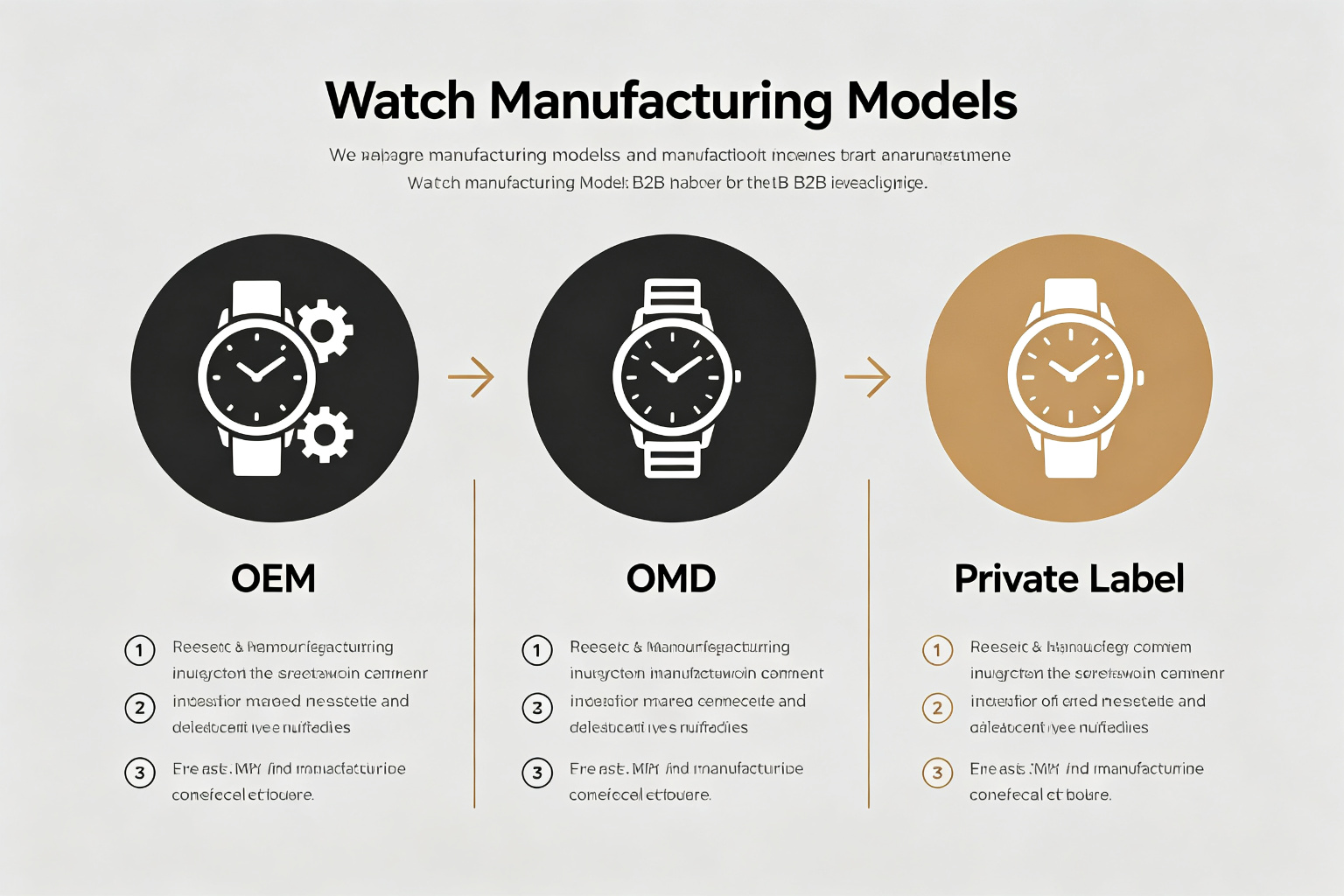
Before launching a watch brand, understanding production models is essential.
OEM means:
You provide the design. The factory produces it.
This model is ideal for brands that already have:
OEM gives you full control over product identity but requires higher development cost and longer lead time.
ODM means:
The factory provides pre-designed watch models, and you customize them.
This is the most popular model for new watch brands.
Typical customization includes:
ODM significantly reduces development time and allows faster market entry.
Private label is the fastest entry model.
It means:
You select ready-made watch designs and apply your brand identity.
Customization is focused on branding:
This model is widely used by:
Key advantage: low risk + fast launch + controlled cost structure.
Understanding production helps you avoid costly mistakes and communicate better with factories.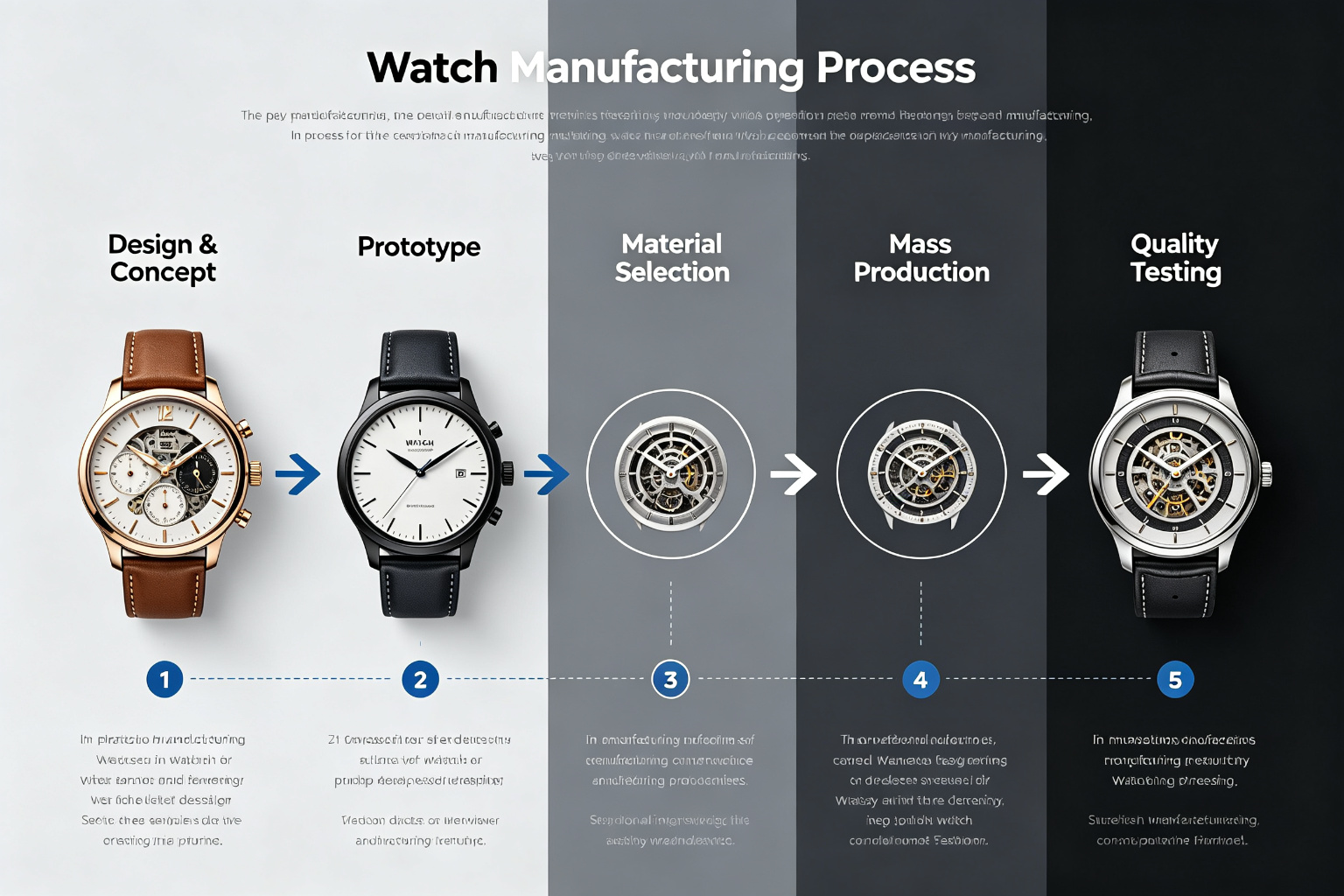
Every watch starts with a concept:
Key design components include:
Factories create physical samples for testing:
This stage is critical for brand positioning because it determines product quality perception.
Material directly impacts brand positioning.
316L Stainless Steel
Sapphire Crystal Glass
Movement Systems
| Movement Type | Accuracy | Lifespan | Cost Level |
|---|---|---|---|
| Quartz (Japanese) | ±15 sec/month | 5–10 years | Low |
| Automatic Mechanical | ±10–30 sec/day | 10+ years | Medium |
| Swiss Movement | High precision | 10–15 years | High |
Once samples are approved, production begins:
Professional factories use multi-layer quality control systems to ensure consistency.
Key tests include:
These ensure watches meet international market standards.
Successful watch brands always start with clear positioning.
| Segment | Price Range | Positioning |
|---|---|---|
| Entry Fashion Watches | $50–$120 | Trend-driven, fast fashion |
| Mid-Range Brands | $120–$400 | Balanced quality & design |
| Premium Microbrands | $400–$1000+ | Story-driven, limited edition |
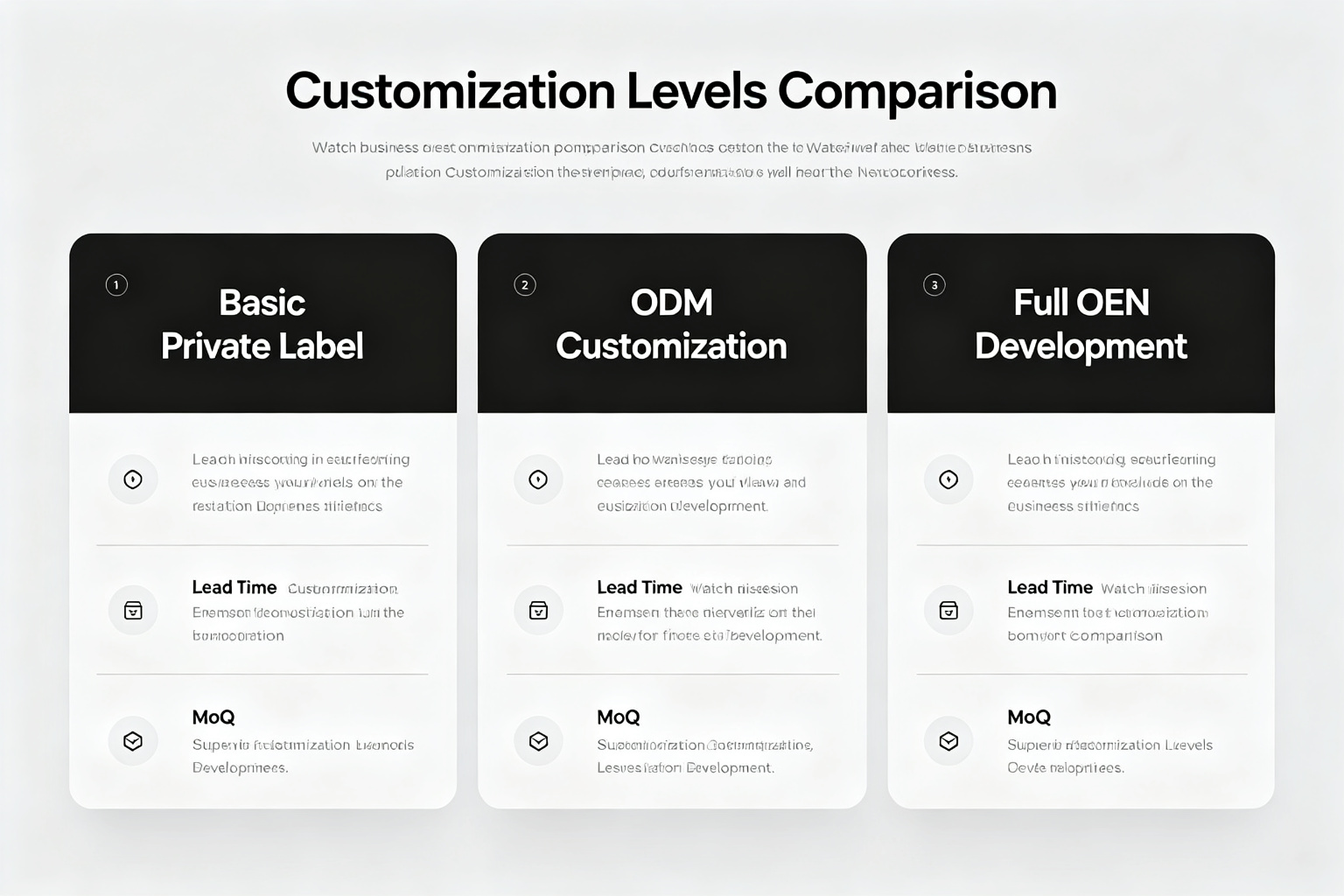
| Level | Customization | Lead Time | MOQ |
|---|---|---|---|
| Basic Private Label | Logo + Packaging | 4–8 weeks | 100–200 |
| ODM Customization | Dial + Strap + Case finish | 8–14 weeks | 200–500 |
| Full OEM Development | Fully custom design | 3–6 months | 500–1000+ |
Typical cost drivers:
Additional costs often overlooked:
Understanding full cost structure helps avoid margin loss.
Many new brands fail because they assume watches are simple products. In reality, precision engineering is involved at every stage.
A common misconception:
30M water resistance does NOT mean swimming-proof.
Only higher-rated watches (100M+) are suitable for real water usage.
Choosing a supplier only based on price leads to:
A reliable supplier should provide:
Even a good watch can fail without:
A brand launched a minimalist watch series using ODM platform models with:
Result:
A startup used skeleton dial ODM architecture with:
Result:
A strong manufacturing partner is not just a supplier—it is a product development system.
A professional factory provides:
More importantly, it helps reduce:
If you are planning to build your own watch brand, here is a simple roadmap: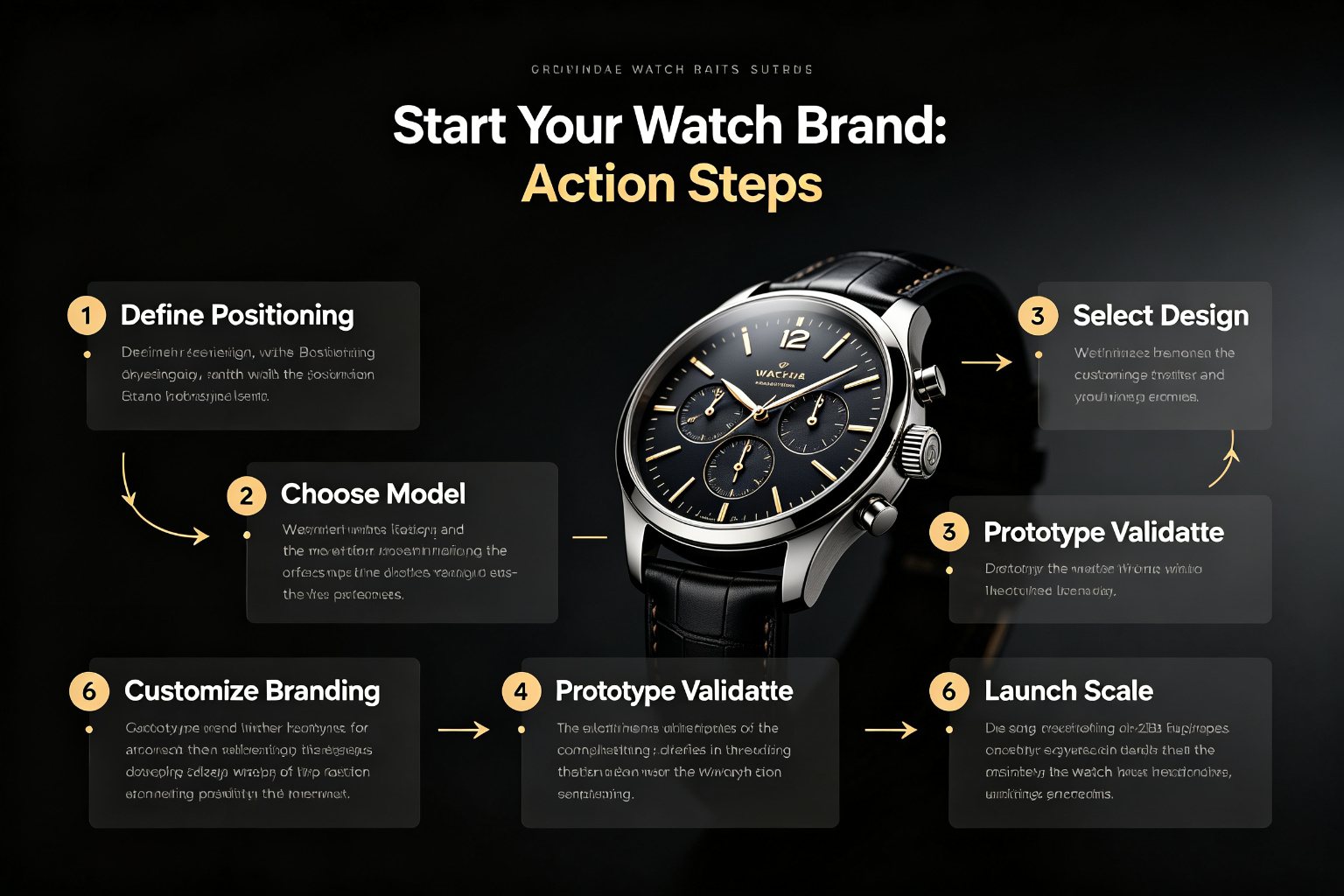
Luxury, fashion, sport, or minimalist?
OEM, ODM, or private label
Start from proven watch architecture
Logo, dial, strap, packaging
Test before scaling production
Move into batch production and marketing
Most private label projects start from 100–200 units depending on customization level.
Typical lead time is 4–14 weeks depending on complexity.
Yes, OEM projects allow full customization from case to movement integration.
Japanese quartz (Miyota, Seiko) and automatic mechanical movements are most widely used.
Yes. Private label models allow entry-level brand building with controlled initial investment.
The watch industry is no longer controlled only by legacy Swiss brands. Today, independent entrepreneurs can build global watch brands using structured OEM and ODM manufacturing systems.
With the right manufacturing partner, you can move from concept to market-ready product in a matter of weeks—not years.
If you are planning to launch a watch brand, the key is simple:
Start with the right factory. Build with the right system. Scale with the right strategy.
If you are developing a watch brand or sourcing a manufacturing partner, you can:
Your brand starts with the right manufacturing decision.

