Introduction
Microbrands face unique challenges when sourcing custom watches. Selecting the right custom watch manufacturer or OEM partner can make or break your brand. This guide helps you navigate options, understand costs, and ensure quality while launching your microbrand.
- Understanding low MOQ requirements
- Balancing cost and quality
- Access to flexible production schedules
- Factory vs trading company
- OEM vs private label capabilities
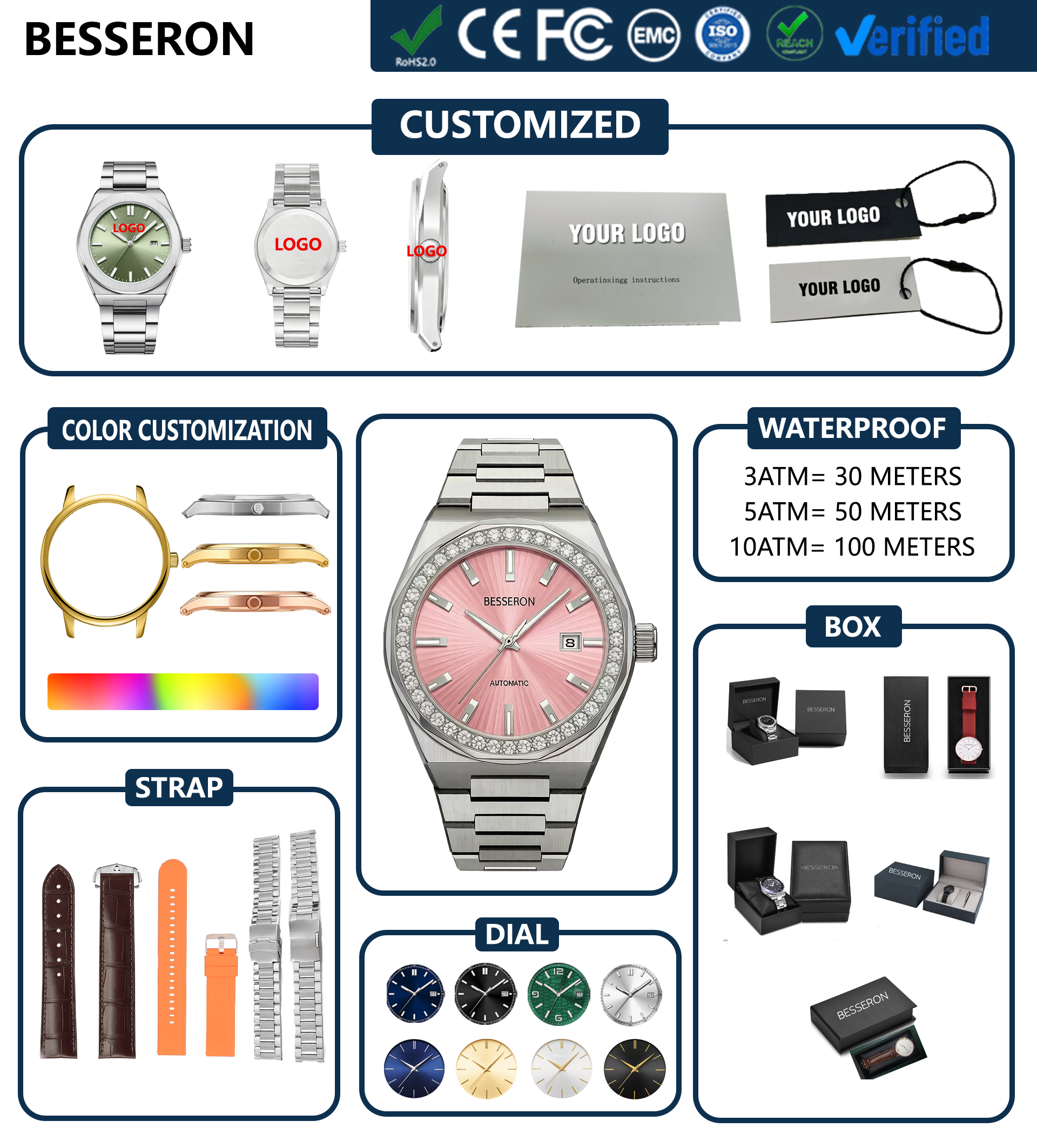
- Customization options (dial, case, straps, logo)
- Lead times and production capacity
- Certifications and quality control standards
- Define your watch specifications and design vision
- Research Chinese watch manufacturers and suppliers
- Compare quotes, MOQ, and service level
- Request samples and evaluate quality
- Negotiate pricing and terms
The watch industry is evolving, and microbrands are at the forefront of this change. Unlike traditional luxury houses with centuries-old heritage or microbrands carve out their niche through agility, storytelling, and direct consumer relationships. They thrive on authenticity, often born from a founder's passion for horology, design innovation, or a unique cultural perspective.
Key differentiators include:
- Niche Focus: Targeting specific communities (e.g., divers, aviators, vintage enthusiasts) or design aesthetics.
- Community Engagement: Building strong, interactive relationships with customers through social media and direct communication.
- Value Proposition: Offering unique designs, quality materials, and often mechanical movements at accessible price points by cutting out traditional retail markups.
- Limited Production: Creating exclusivity and desirability through smaller batch sizes.
For B2B buyers in the EU, US, and Australia, understanding this ethos is crucial. Your manufacturing partner must align with this philosophy, offering the flexibility and specialized services needed to bring these unique visions to life.
Choosing the right production strategy is paramount for microbrand success. The optimal model balances quality, flexibility, cost-effectiveness, and scalability:
-
Full-Service Manufacturing Partnership: This is often the most efficient path. Partner with a manufacturer experienced in microbrands who can handle the entire process: design refinement, prototyping, component sourcing (movements, cases, dials, hands, straps), assembly, quality control (QC), and packaging. This model offers significant advantages:
- Expertise: Leverage the manufacturer's technical knowledge and established supply chain.
- Efficiency: Streamlined communication and project management.
- Cost Control: Access to economies of scale on components and efficient production lines.
- Quality Assurance: Established QC protocols ensure consistency.
-
Component Sourcing & Assembly: Some brands prefer more direct control, sourcing key components (like movements) themselves while relying on the manufacturer for case production, dial customization, and final assembly. This requires more hands-on management but offers deeper customization potential.
-
Avoiding the Pitfalls: Steering clear of simply rebadging existing generic watch designs ("private label") is essential for building a genuine brand identity. A true manufacturing partner helps you create something original.
How to Create a Unique Product Identity
In a crowded market, distinctiveness is non-negotiable. Establishing a strong product identity involves several key elements:
- The "Why": Define your brand's core purpose and story. What inspired the brand? What problem does it solve? What values does it embody? This narrative should resonate through every design choice.
- Target Audience: Have a crystal-clear picture of who you are designing for. Their preferences, lifestyle, and aspirations should guide aesthetics and functionality.
- Design Language: Develop a consistent visual vocabulary * Case Shape & Profile: Round, tonneau, cushion? Modern, vintage-inspired? Bezel type?
- Dial Layout: Symmetrical, asymmetric? Sub-dial configuration? Applied indices vs. printed?
- Typography: Font choices for numerals and branding are critical.
- Material Palette: Steel, titanium, bronze? Matte vs. polished finishes?
- Color Scheme: Signature colors that become recognizable.
- The "3C" Principle: Aim for Cohesive, Compelling, and Consistent design across all models and brand touchpoints.
-
Custom Dials: The Focal Point
- Complex Finishes: Guilloché (hand or machine), grained textures (sandblasted, sunray, vertical/horizontal brushing), enamel.
- Material Innovation: Meteorite, wood veneer, stone, carbon fiber, aventurine glass.
- Luminescence: Unique Super-LumiNova® colors or patterns (e.g., fauxtina lume).
- Applied Elements: Custom-shaped indices, logos, or lume plots.
- Multi-Layer Dials: Creating depth through different levels and finishes.
- Artisanal Techniques: Miniature painting, cloisonné enamel (for ultra-premium pieces).
-
Custom Cases: Defining Form
- Unique Profiles: Moving beyond standard round cases to tonneau, cushion, or asymmetric designs.
- Material Choices: Exploring alternatives like titanium (lightweight), bronze (develops patina), or ceramic (scratch-resistant).
- Finishing Combinations: Mixing polished, brushed, and sandblasted surfaces on different parts of the case * Integrated Lugs: Creating a seamless flow from case to bracelet.
- Special Features: Developing unique crown guards, bezel locking mechanisms, or caseback designs (e.g., exhibition, engraved).
-
Movement Selection: The Heartbeat
Reliable Foundations: Starting with high-quality, readily available movements from Miyota (Citizen), Seiko (SII), or Swiss makers like Sellita or ETA. These offer reliability and serviceability. Customization Options: While full movement manufacture is cost-prohibitive for most microbrands, manufacturers can offer:
-
-
- Rotor Engraving: Custom branding on the automatic rotor.
- Movement Decoration: Perlage, Geneva stripes, or blued screws applied to the movement visible through a display caseback.
- Special Modules: Working with manufacturers to integrate unique complications (e.g., power reserve indicators) if feasible for the scale.
- Hand-Winding Options: Offering a more tactile experience.
-
Watch Packaging: The Unboxing Experience
Beyond the Generic Box: Creating packaging that reflects the brand's aesthetic and values. Options include:
-
- Material: Wood, leather, high-grade recycled cardboard.
- Design:** Minimalist, vintage-inspired, rugged (for tool watches).
- Structure: Watch pillows that securely hold the timepiece, compartments for straps/tools.
- Extras: Include branded cleaning cloths, warranty cards, and perhaps a small booklet telling the brand story. Sustainability (recycled materials, minimal design) is increasingly important.
Navigating the Partnership: Key Considerations for B2B Buyers
Choosing the right watch manufacturer for microbrands involves careful evaluation:
- Experience & Portfolio: Do they have a proven track record with microbrands? Review their past projects for quality and design diversity.
- Minimum Order Quantities (MOQs): Are their MOQs realistic for a microbrand launch (often starting around 100-300 pieces per model)? Can they scale as you grow?
- Communication & Transparency: Is the team responsive and clear about processes, timelines, and costs? Are they proactive in offering solutions?
- Technical Capabilities: Do they have in-house design support, prototyping (3D printing, CNC), and the ability to handle complex customizations? What is their QC process?
- Supply Chain & Lead Times: Are they reliable in sourcing quality components? What are realistic production timelines?
- Intellectual Property (IP) Protection: Ensure clear agreements are in place regarding design ownership and confidentiality.
- Value-Added Services: Do they offer assistance with logistics, import/export, or after-sales support?
The Development Process: From Sketch to Wrist
Working with a manufacturer typically follows these stages:
- Concept & Briefing: Sharing your vision, target audience, specifications, and budget.
- Design Refinement & Technical Drawings: Collaborating on detailed CAD designs and specifications.
- Prototyping: Creating physical samples (often via CNC machining and 3D printing) to evaluate design, fit, and feel. Iterations are common.
- Component Sourcing & Production: The manufacturer sources parts and begins mass production upon final prototype approval.
- Quality Control (QC): Rigorous checks at multiple stages (components, assembly, final product) against agreed specifications.
- Packaging & Logistics: Assembling the final packaged product and arranging shipment.
Case Study: Building a Successful Microbrand Collaboration
Consider "Marlin Watches," an Australian microbrand focused on vintage-inspired dive watches. They partnered with an experienced microbrand manufacturer. The process involved:
- Challenge: Creating a distinctive 300m diver with a unique bezel action and dial texture.
- Solution: The manufacturer suggested a coin-edge bezel with a robust unidirectional click mechanism. For the dial, they proposed a deep sunray blue finish with applied, vintage-lume-filled indices.
- Collaboration: Close work on case dimensions for wearability, prototyping the bezel mechanism, and refining the dial color.
- Outcome: A successful Kickstarter campaign funded production. The manufacturer delivered high-quality watches on time, enabling Marlin to establish a strong reputation for design and build quality.
Overcoming Common Microbrand Challenges
Launching a watch brand is demanding. A good manufacturer helps mitigate risks:
- Funding: Be realistic about costs (tooling, MOQs, shipping, marketing). Consider pre-orders (e.g., Kickstarter) to fund production.
- Logistics: Understand import/export duties and regulations in your target markets. Your manufacturer should guide you.
- Quality: Never compromise. Rigorous QC from your manufacturer is essential for reputation.
- Differentiation: Avoid generic designs. Leverage your manufacturer's expertise to create something truly unique.
- Patience: Development and production take time. Allow ample time for prototyping and refinement.
Q1: What is the typical Minimum Order Quantity (MOQ) for a microbrand watch? A1: MOQs vary significantly depending on the manufacturer and the complexity of the design. For standard automatic 300 units per model/color variation. Highly customized pieces (e.g., complex dials, unique case shapes) may require higher MOQs due to specialized tooling costs. Always discuss MOQs upfront.
Q2: How long does the entire watch development and production process take? A2: The timeline can range from 6 months to over a year. Key phases include design refinement and prototyping (1-3 months), component sourcing (1-2 months), production (3-6 months), and QC/packaging/shipping (1-2 months). Complex designs or unforeseen challenges can extend this. Clear communication and planning with manufacturer are vital.
Q3: Can manufacturers help with watch design if I'm not a designer? A3: Yes, many manufacturers offer in-house design support or have partnerships with design studios. They can translate your concepts and requirements into technical drawings and viable watch designs, advising on feasibility, cost, and manufacturability. Collaboration is key.
Q4: What movements are recommended for microbrand watches? A4: Reliable, well-established movements are preferred. Japanese movements from Miyota (e.g., 9000 series) and Seiko (e.g., NH35, NH38) are popular for their robustness and affordability. Swiss1) or ETA offer higher prestige. The choice depends on budget, target price point, and desired features (e.g., hand-winding, hacking seconds).
Q5: How are intellectual property rights handled? A5: Reputable manufacturers will respect your IP. Ensure a clear contract stipulates that all designs developed specifically for your project are your exclusive property. Non-disclosure agreements (NDAs) are common to protect your concepts. Discuss IP ownership of any generic tooling created.
Q6: What are the key quality control steps during manufacturing? A6: QC should occur at multiple stages: incoming component inspection, pre-assembly checks, movement testing (accuracy, power reserve), post-assembly functional testing (water resistance, timing), and final cosmetic inspection. Reputable manufacturers will have detailed QC checklists and provide reports. Request samples (Pre-Production Samples or Pilot Samples) for your own approval before full production.
Q7: Can manufacturers assist with packaging and logistics? A7: Most full-service watch manufacturers for microbrands offer packaging design and production services. They can also handle logistics, including shipping and customs documentation assistance. Clarify what services are included and any associated costs.
Start Your Microbrand Watch Project
The journey of creating a microbrand watch is challenging but incredibly rewarding. Finding the right watch manufacturer for microbrands is arguably the most critical step. A partner with the expertise, flexibility, and commitment to quality can transform your vision into a tangible, desirable timepiece that resonates with your audience.
Ready to bring your unique watch concept to life? Partner with a manufacturer who understands the passion and precision required for microbrand success. Start your microbrand watch project today.
High Conversion CTA
“Contact us today to find your perfect microbrand watch manufacturer and request a sample production quote!”
Additional Sections
- Case Studies of Successful Microbrands
- FAQ: Common Questions About Watch Manufacturing for Microbrands


