
Watch manufacturing is a highly engineered process that combines precision machining, material science, and structured quality control systems. For B2B buyers—including US, European, and Australian watch brands, distributors, and microbrands—understanding the OEM and ODM production workflow is critical for reducing sourcing risks and improving product success rates.
Unlike consumer goods, watch production requires micron-level precision, strict process control, and multi-stage validation. Working with an experienced OEM/ODM manufacturer with 16+ years of production expertise ensures stability from concept to mass production.
This guide explains the complete watch manufacturing process step by step, including materials, engineering systems, assembly workflows, QC systems, and OEM vs ODM strategic differences.
Modern watch production typically consists of 6 core stages:
Each stage requires strict coordination between engineering, production, and quality teams.
For example, CNC machining of a watch case alone can account for nearly half of total production time due to multi-axis precision requirements and finishing complexity.
Professional factories maintain tolerances as tight as ±20 microns, ensuring consistency across thousands of units.
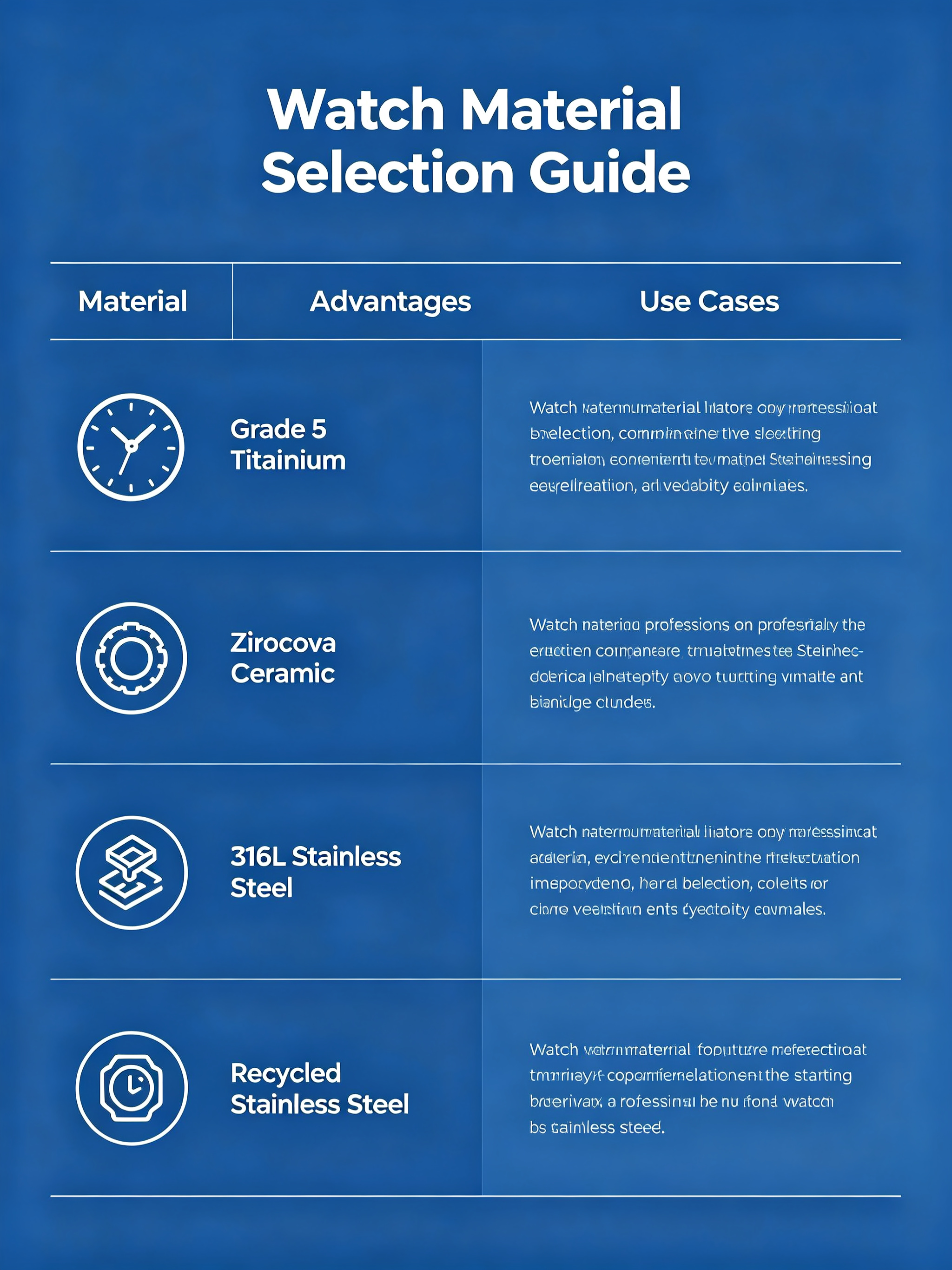
Material selection is one of the most critical decisions in OEM watch production because it directly impacts durability, brand positioning, and production cost.
| Material | Key Advantages | Typical Applications |
|---|---|---|
| 316L Stainless Steel | Corrosion-resistant, stable, cost-efficient | Fashion & mid-range watches |
| Grade 5 Titanium | Lightweight, hypoallergenic | Sports & outdoor watches |
| Ceramic (ZrO2) | Scratch-resistant, premium finish | Luxury collections |
| Recycled Steel | Sustainable, EU compliance | Eco-friendly brands |
Experienced OEM factories use simulation tools such as:
These tests help eliminate up to 80% of structural failure risks before prototyping.
Material selection is not just aesthetic—it directly affects:
Precision engineering defines the quality level of a watch brand.
Modern OEM factories use:
Each case requires:
Surface roughness can reach as low as Ra ≤ 0.01μm, delivering mirror-grade finishing quality.
Common finishing techniques include:
PVD coating thickness consistency is critical, as variations may affect color tone stability across production batches.
Experienced factories ensure:
The dial is the visual identity of a watch brand and requires extreme precision.
Materials used include:
Each dial undergoes stamping, cutting, and surface preparation before decoration.
Depending on design requirements, OEM factories apply:
These processes require strict control over pattern depth (as low as 0.02–0.15mm precision range).
Dial printing includes:
Luminous materials (e.g., Super-LumiNova equivalent) are applied through controlled automated systems to ensure uniform brightness.
Professional factories ensure:
The movement is the functional heart of every watch.
Swiss Movements
Japanese Movements (Miyota / Seiko)
Chinese Movements
Movement integration must align with:
Even a 0.2mm mismatch can lead to:
Experienced factories ensure:
Quality control determines whether a watch is market-ready.
Professional factories operate in:
This ensures movement stability and dial integrity.
Includes:
Each step uses torque-controlled tools for precision fastening.
A complete QC system includes:
Factories with 16+ years of experience implement:
This significantly reduces return rates and improves brand reliability.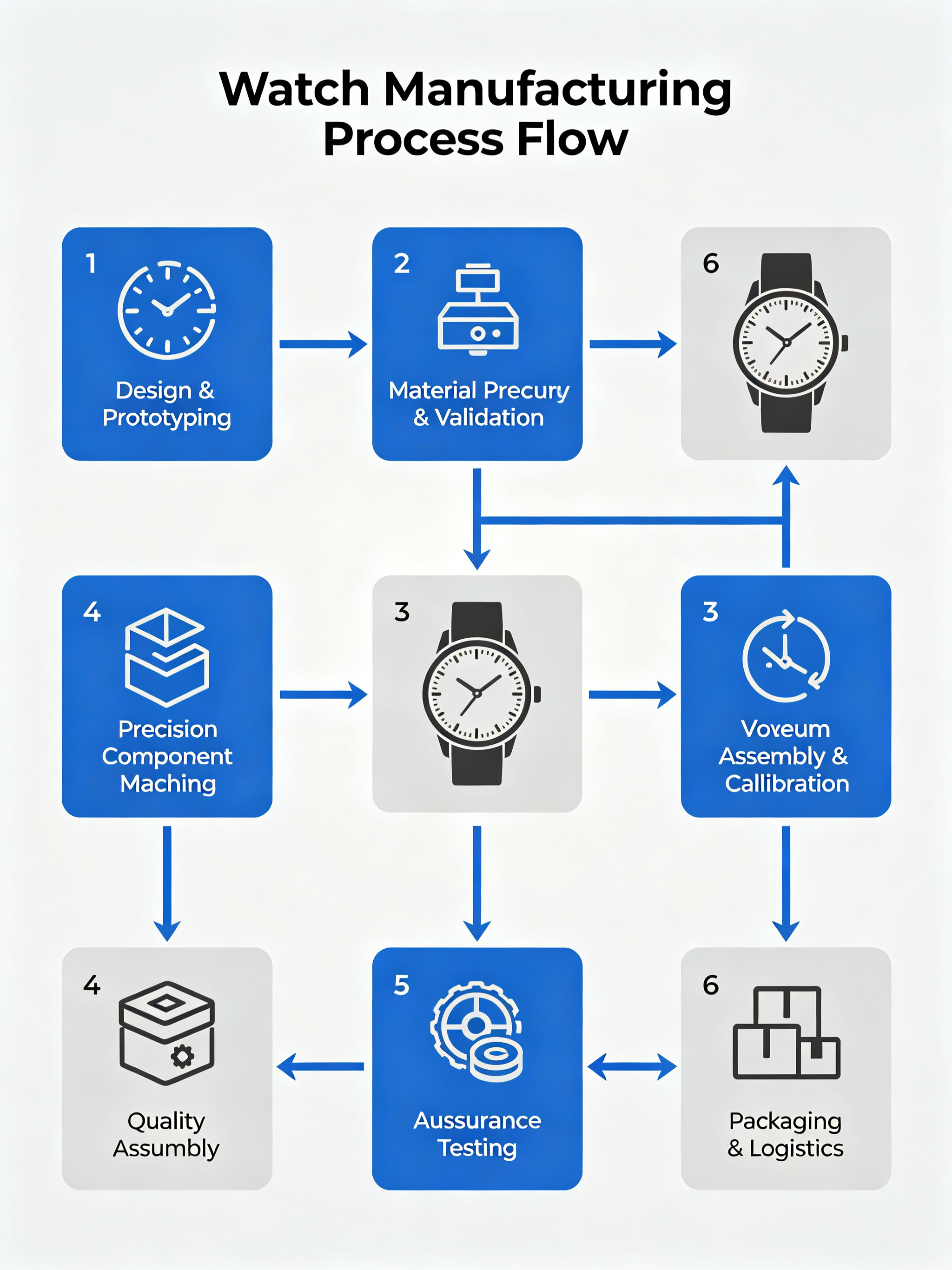
Understanding OEM and ODM models is essential for procurement decisions.
Workflow:
Design → Technical drawings → Sampling → Mass production
Workflow:
Market research → Design library → Prototyping → Production
Most successful brands use a hybrid model:

Manufacturing stability is a key factor in global brand success.
Factories with 16+ years of experience typically implement:
Critical components sourced from multiple certified suppliers.
Buffer inventory for high-risk components such as:
Historical defect tracking improves:
In today’s competitive watch market, success is not only about design—it is about manufacturing execution capability.
Understanding the watch manufacturing process allows brands to:
An experienced OEM/ODM partner with 16+ years of manufacturing expertise provides more than production—they provide engineering stability, supply chain control, and scalable brand support.
We work with:
If you are planning to develop a custom watch collection, OEM/ODM manufacturing capability will directly determine your brand success rate.
Most OEM factories offer 100–300 units for entry models and 500–1000 units for full customization projects.
Typically:
Yes. OEM/ODM customization includes:
Japanese movements are the most balanced option for reliability, cost, and global availability.
The biggest risks are poor supplier communication, lack of technical clarity, and inexperienced factories. Working with experienced OEM partners significantly reduces these risks.

