
Every watch brand founder eventually arrives at the same crossroads. The case design is finalized. The dial artwork is approved. The packaging concept is ready. But the decision that will determine how your customers experience your watch every single day — the movement — remains unresolved.
Choose wrong, and you ship watches that lose 45 seconds per day, generating returns and one-star reviews. Choose wisely, and your customers receive timepieces that perform reliably for years, building the trust that transforms first-time buyers into brand advocates.
This guide provides watch brand founders with a comprehensive framework for movement selection. It covers the four dominant automatic calibers in the 1,500 retail segment — Seiko NH35, Miyota 9015, ETA 2824, and Sellita SW200 — and provides the technical data, cost analysis, and brand positioning guidance that founders need to make informed decisions.
Movement selection is not merely a technical specification. It is a strategic business decision that affects your product's reliability, your brand's perceived value, your warranty cost structure, and your supply chain predictability.
The movement is the only component of your watch that the customer interacts with continuously. They do not see the case machining precision after the first day of wear. They do not examine the dial printing under magnification after the unboxing. But every time they glance at their wrist, they register whether the seconds hand is sweeping smoothly or ticking erratically. Every morning, when they wind the watch or set the time, they feel the quality of the crown action. These daily interactions accumulate into an overall impression of brand quality that is almost entirely movement-dependent.
From a business perspective, the movement also determines your service and warranty exposure. A Miyota 9015 regulated to ±8 seconds per day generates dramatically fewer warranty claims than an unregulated unit running at +35 seconds per day. The difference in warranty cost, customer service burden, and brand reputation impact can easily exceed the per-unit cost of the higher-spec movement over the life of a production run.
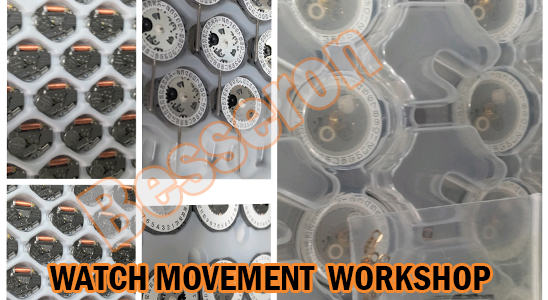
The Seiko NH35 is the most widely used automatic movement in independent watchmaking, and for good reason. It offers 24 jewels, hacking seconds (the seconds hand stops when the crown is pulled to the time-setting position), hand-winding capability, and a 41-hour power reserve. It runs at 21,600 vibrations per hour (6 beats per second), producing the smooth sweep that consumers associate with automatic watches.
The NH35's defining characteristics are reliability and availability. It has been in continuous production for over a decade with a proven track record. Spare parts are universally available. Every competent watchmaker knows how to service it. And it costs approximately 50 at wholesale depending on volume and decoration requirements.
The trade-off is thickness and refinement. At 5.32mm thick, the NH35 requires a case that is at least 11mm tall — appropriate for dive watches, sports watches, and field watches, but challenging for slim dress designs. Its out-of-box accuracy specification is -20 to +40 seconds per day, which means that regulation is essential for brands that want to deliver consistent performance.
The NH35 is the correct choice for brands building robust sports watches, dive watches, and field watches in the 450 retail segment, where reliability and serviceability matter more than thinness and refinement.
The Miyota 9015 represents a significant step up in refinement. It is thinner (3.9mm), runs at a higher frequency (28,800 vibrations per hour, or 8 beats per second), and delivers superior accuracy when properly regulated. The 9015 is the standard choice for dress watches and thinner sports watches where case thickness is a design priority.
The 9015's slim profile enables case thicknesses of 10mm or less — the threshold at which a watch transitions from "substantial" to "elegant" in the perception of customers accustomed to luxury watch proportions. For brands targeting the Manhattan boutique market, where dress watches are expected to slide easily under a shirt cuff, this capability is often decisive.
The cost premium is meaningful: the 9015 sells for approximately 85 at wholesale, roughly double the cost of the NH35. But when properly regulated, the 9015 can deliver chronometer-grade accuracy — within ±5 seconds per day — which positions it for brands targeting the 1,200 retail segment where accuracy expectations are higher.
The ETA 2824 and its clone, the Sellita SW200, occupy the premium tier of mass-produced automatic movements. Both are 25-jewel movements running at 28,800 vibrations per hour with 38 to 41 hours of power reserve. They are manufactured in Switzerland and carry the prestige of Swiss origin.
From a performance perspective, the ETA 2824 and Sellita SW200 are comparable to a well-regulated Miyota 9015. The differences are subtle: slightly smoother winding feel, slightly more refined hand-setting action, and the marketing value of "Swiss movement" on the dial or in the product description.
The cost difference is substantial. ETA 2824 movements sell for approximately 250 at wholesale, and Sellita SW200 movements for 200. This positions them for brands targeting the $1,000-plus retail segment, where the Swiss movement designation justifies the cost in the customer's perception. It is important to note, however, that ETA has restricted supply to non-Swatch Group brands since 2020, making the Sellita SW200 the more reliably available Swiss option for independent brands.
A movement's factory specification and its actual performance in a customer's watch are not the same thing. The gap between them is regulation — the process of adjusting the movement's timing to achieve optimal accuracy in multiple positions.
An unregulated Seiko NH35 may run anywhere from -20 to +40 seconds per day. That is a 60-second range — a watch that loses 20 seconds today and gains 40 seconds tomorrow is technically within specification but practically unacceptable to a customer who paid $400 for it.
A regulated NH35 can run within ±8 to ±12 seconds per day. A regulated Miyota 9015 can achieve ±5 to ±8 seconds per day. A regulated ETA 2824 or Sellita SW200 can achieve chronometer-grade performance of -4 to +6 seconds per day.
As our movement technician at BESSERON explains: "We regulate every automatic movement before casing, regardless of caliber. We time in five positions — dial up, dial down, crown up, crown down, and crown left — and adjust until the average daily rate is within the tolerance band we guarantee to the client. The timing machine printout is included with every watch. If a brand is not getting a timing printout with their production order, they are not getting regulated movements."
Movement choice should align with your brand's market position, not just its technical requirements. The table below provides a reference framework.
Entry-Level Automatic (350 retail): Seiko NH35, regulated to ±12s/day. The NH35's proven reliability at this price point creates customer trust. Brands should emphasize the movement's heritage and the regulation process in their marketing.
Mid-Range Automatic (700 retail): Miyota 9015, regulated to ±8s/day, with display case back showing decorated rotor. The 9015's slimmer profile, higher beat rate, and superior accuracy justify the step up from NH35-based competitors. Brands should emphasize the movement's precision and thinness.
Premium Automatic (1,200 retail): Miyota 9015 or Sellita SW200, regulated to ±5s/day, with decorated rotor and perlage finishing. At this price point, customers expect near-chronometer accuracy and visible movement decoration. The Sellita SW200 provides the additional benefit of Swiss origin for marketing.
Luxury Automatic ($1,200+ retail): Sellita SW200 or ETA 2824, regulated to chronometer specifications (-4/+6s/day), with full decoration. At this tier, Swiss origin is effectively expected, and accuracy must be individually verified and documented.
Not every watch brand builds around automatic movements. Quartz and meca-quartz alternatives offer their own strategic advantages.
Standard quartz movements — such as the Miyota 2035 or Seiko VX series — cost 8 at wholesale and deliver accuracy of ±20 seconds per month. They are appropriate for entry-level fashion watches in the 150 retail segment.
Meca-quartz chronograph movements — such as the Seiko VK64 and Miyota 6S21 — combine quartz timekeeping with a mechanical chronograph module. The chronograph seconds hand sweeps like a mechanical chronograph, while the main timekeeping is quartz-accurate. Meca-quartz movements cost 40 at wholesale and are popular for chronograph watches in the 350 retail segment.
Solar-powered movements — such as the Epson VS series — use photovoltaic cells to charge a rechargeable battery, eliminating the need for battery replacement. Solar movements have gained traction in the 500 segment, particularly among eco-conscious brands and brands targeting the outdoor and adventure markets.
At BESSERON, movement selection is treated as a collaborative decision between our engineering team and the brand founder. We provide technical consultation on movement choice based on your target retail price, case design constraints, and brand positioning goals.
Every movement we install — whether a Seiko NH35 sourced through authorized Japanese distribution or an ETA 2824 sourced through Swiss channels — is individually inspected upon receipt, regulated in five positions using a Witschi timing machine, and verified again after casing. The timing machine printout is included with every watch. This process ensures that your customers receive watches that perform to specification, not watches that happen to fall within the movement manufacturer's factory tolerance band.
Q: Which movement is best for a first-time watch brand launch?
A: The Seiko NH35 is the recommended starting point for most first-time brands. It offers proven reliability, universal parts availability, straightforward serviceability, and a cost structure that keeps your retail price accessible. It is more important to launch with a reliable product that customers trust than to over-invest in movement specification before you have validated market demand. As your brand grows and your price point increases, you can move to Miyota 9015 or Sellita SW200 in subsequent collections.
Q: How many seconds per day is "acceptable" accuracy for a $500 watch?
A: For a $500 automatic watch, customers generally expect accuracy within ±10 to ±15 seconds per day. A movement regulated to ±8 seconds per day will satisfy virtually all customers. More important than the absolute accuracy is consistency — a watch that runs at +8 seconds per day every day is perceived as more reliable than a watch that varies unpredictably between +5 and +25 seconds per day. At BESSERON, we target ±8 seconds per day for Miyota 9015 movements and ±12 seconds per day for Seiko NH35 movements, with the timing printout verifying actual performance.
Q: Can I use a Swiss movement in a watch manufactured in China?
A: Yes, and this is increasingly common. A premium OEM watch manufacturer sources Swiss movements through authorized distribution channels, integrates them into Chinese watch manufactured cases and dials, and provides the same precision regulation that a Swiss assembler would deliver. At BESSERON, we source ETA and Sellita movements through authorized channels and apply identical regulation and testing protocols regardless of movement origin. The key consideration is lead time — Swiss movements typically require 8 to 12 weeks advance ordering.
Q: What is the difference between decorated and undecorated movements?
A: Decorated movements feature aesthetic enhancements — Geneva stripes, perlage, blued screws, engraved rotors — visible through a display case back. Undecorated movements are functionally identical but lack the cosmetic finishing. Decoration adds 15 per unit for Japanese movements and 50 for Swiss movements. It is worth the investment if your watch has a display case back, but it is wasted cost if your watch has a solid case back.
Q: How do I handle movement-related warranty claims?
A: Movement warranty claims fall into two categories. Manufacturing defects (broken components, non-functioning automatic winding) should be covered by the movement manufacturer's warranty through your watch manufacturer. Performance complaints (running fast or slow) are typically resolvable through regulation rather than replacement. Your watch manufacturer should have a defined process for both scenarios. At BESSERON, we process movement warranty claims within five business days and maintain stock of common movements for rapid replacement.
Ready to select the right movement for your watch brand? Contact BESSERON for technical consultation on movement options for your OEM, ODM, or Private Label watch production project.

